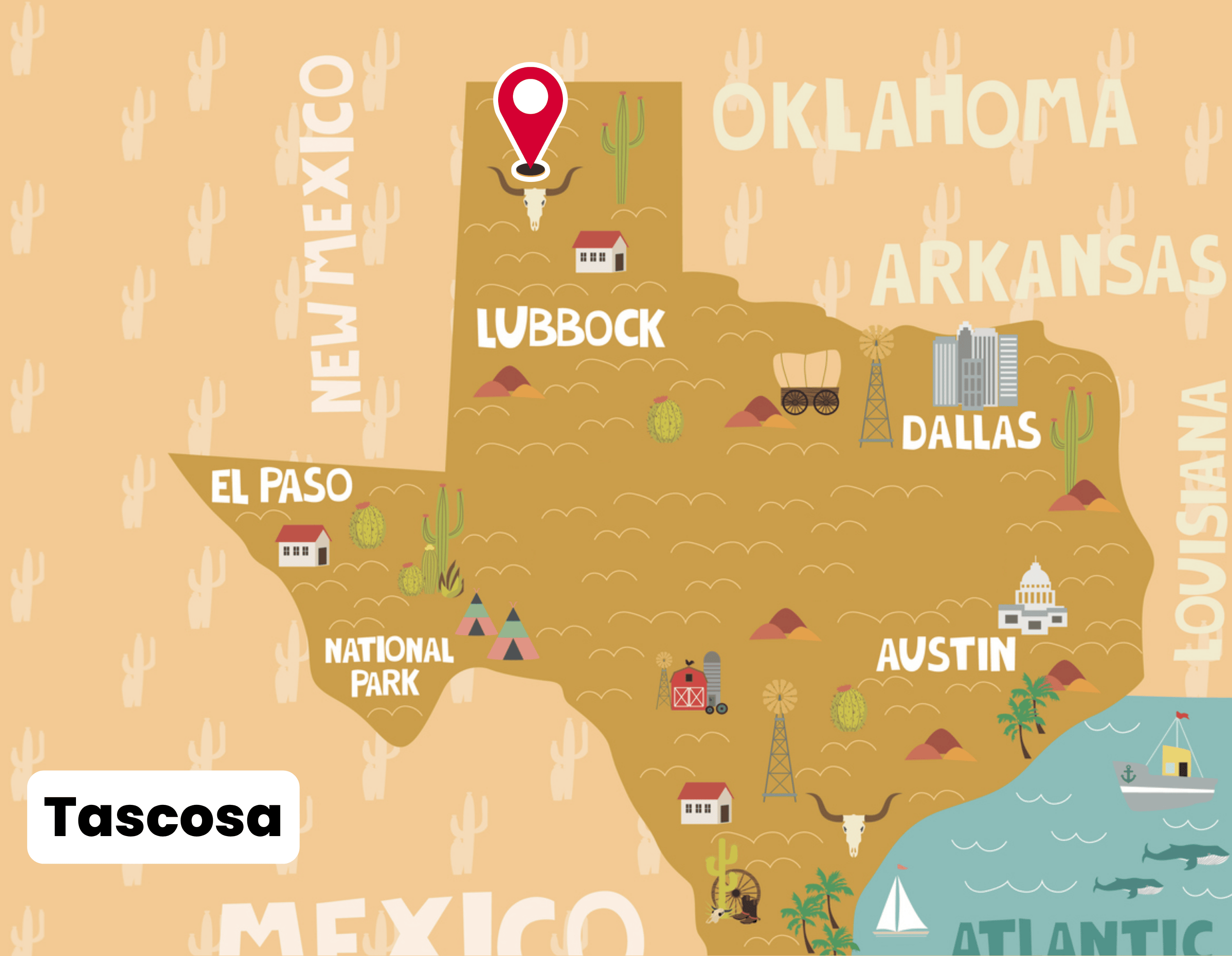
Tascosa, founded in 1876 on the Canadian River in the Texas Panhandle, grew into the “Cowboy Capital of the Plains” before declining after the railroad bypassed it in the late 1880s. Known for lawlessness and the deadly 1886 Jenkins Saloon gunfight, it was nearly abandoned by 1915. In 1939, the site became Cal Farley’s Boys Ranch, preserving its historic courthouse, schoolhouse, and Boot Hill Cemetery.
Founding and Early Days
Tascosa, originally called Plaza Atascosa, was founded in 1876 near a ford on the Canadian River in the Texas Panhandle. The first settlers were Hispanic sheepherders from New Mexico, led by Casimero Romero, who built adobe homes at the crossing. Soon after, Anglo settlers arrived, including blacksmith Henry Kimball, who set up one of the town’s earliest shops.
The settlement’s location made it valuable. It was a reliable river crossing and a natural hub for cattle trails that connected the Panhandle to markets farther east. Large ranching outfits — including the LIT, LX, LS, Frying Pan, and later the XIT Ranch — surrounded the town, ensuring that cowboys, traders, and drifters all passed through.
Growth of a Frontier Town
By the late 1870s, Tascosa had a post office, stores, saloons, and boarding houses. Its reputation as a ranching hub grew quickly. By the early 1880s, it was known as the “Cowboy Capital of the Plains.”
In 1880, Tascosa was named the county seat of Oldham County, and by 1884, a stone courthouse stood as a symbol of its growing importance. The town’s population numbered in the hundreds, boosted by cowboys from nearby ranches, buffalo hunters, gamblers, and settlers looking for opportunity.
But along with prosperity came lawlessness. Saloons, gambling halls, and factional rivalries created an atmosphere of constant tension.
The Jenkins Saloon Gunfight of 1886
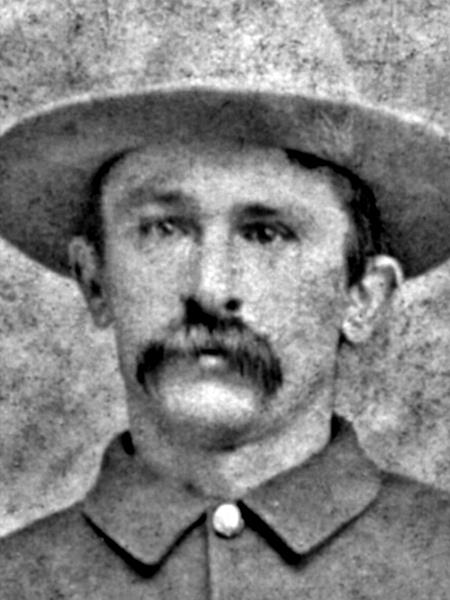
The most infamous event in Tascosa’s history occurred on March 21, 1886, in Jenkins Saloon. The gunfight was sparked by tensions between two groups:
-
The LS Ranch’s Home Rangers, who represented the interests of big cattle operations.
-
A rival group known as “The System,” made up of small ranchers, rustlers, and their allies.
When the shooting ended, four men were dead:
-
John Gottlieb “Dutch Henry” Lang – German-born ranch hand, associated with the LS Ranch.
-
Frank Valley – LS cowboy.
-
Louis Bousman – part of The System faction.
-
John Gough – another of The System’s supporters.
Two others were wounded but survived. The bloodshed left a mark on Tascosa’s reputation, making it one of the most violent cowtowns of the Old West. The cemetery known as Boot Hill became the final resting place for many of the town’s gunfight victims, including Lang.
Decline and Abandonment
Tascosa’s heyday was short. Several changes undercut its importance:
-
Barbed wire ended the era of open-range cattle drives in the early 1880s.
-
In 1887, the Fort Worth and Denver City Railway bypassed Tascosa, drawing business away.
-
By 1915, the county seat moved to Vega, leaving only a handful of families in Tascosa.
The once-bustling “Cowboy Capital” faded into a ghost town.
Transformation into Boys Ranch

In 1939, rancher Julian Bivins donated the Tascosa site, including the old courthouse, to Cal Farley, a former professional wrestler and businessman. Farley used the property to establish Cal Farley’s Boys Ranch, a residential school and community for at-risk youth.
Today, Boys Ranch continues to operate, carrying on a legacy of service in place of Tascosa’s violent past. Two historic structures still stand:
-
The 1884 stone courthouse, now restored as the Julian Bivins Museum.
-
The 1889 Oldham County schoolhouse, preserved as part of the historic grounds.
Meanwhile, Boot Hill Cemetery remains a reminder of Tascosa’s rough frontier years.
Interesting Facts
-
Cowboy Capital Rivalry: At its peak, Tascosa was compared to Dodge City, Kansas, as one of the toughest and busiest cattle towns.
-
Deadlier than the O.K. Corral: The 1886 Jenkins Saloon fight left four dead, compared to three at the famous Tombstone shootout.
-
Boot Hill Legacy: Many who died violently in Tascosa, including John Gottlieb Lang, were buried at the town’s Boot Hill Cemetery.
-
New Purpose in 1939: The transformation into Cal Farley’s Boys Ranch turned the abandoned cowtown into a lasting educational community.
Photos: