
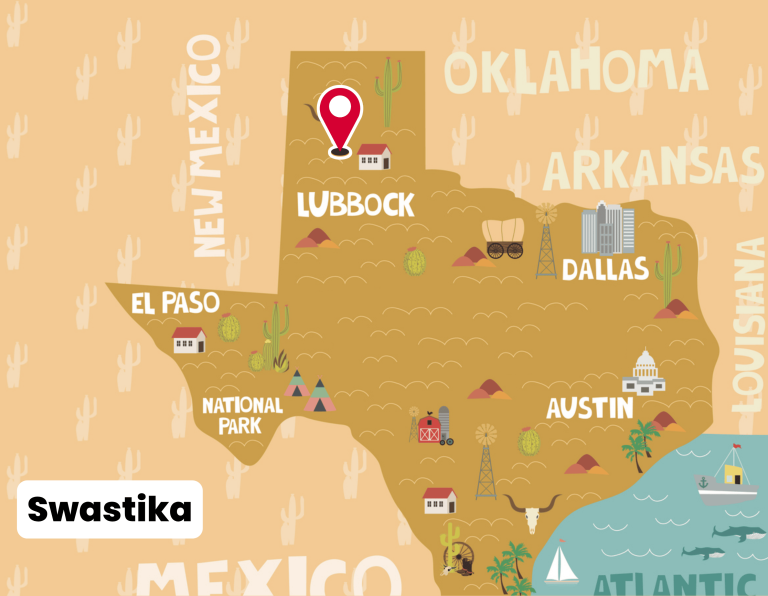
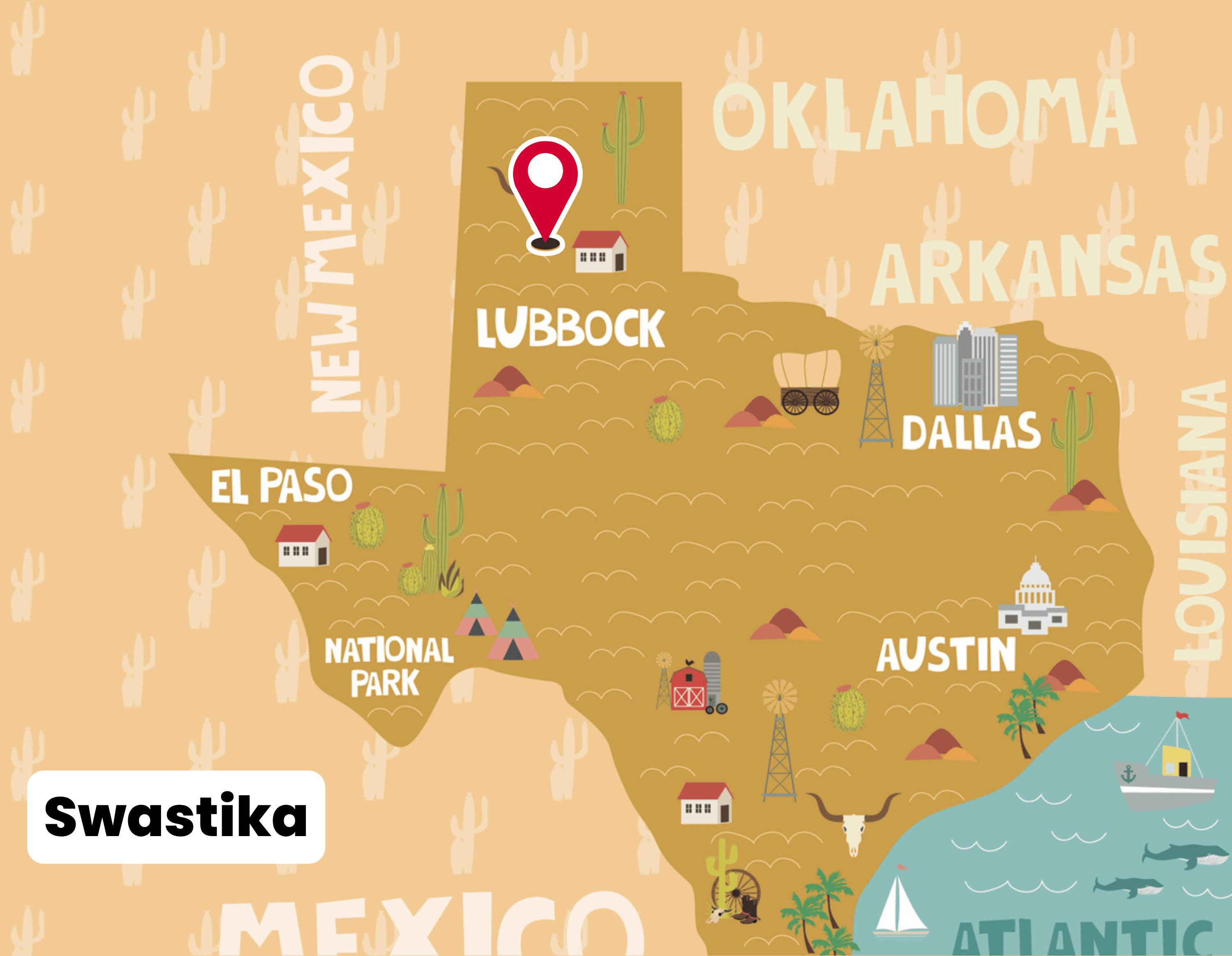
Swastika was a named location in Hale County, Texas, that appeared on maps from the 1920s through the 1940s. The site was situated in the Texas Panhandle, near Hale Center and south of Plainview. It no longer appears on modern maps, and there is little evidence that it ever developed into a permanent settlement.
Historical Background
Swastika is believed to have been no more than a railroad switch or siding, possibly associated with nearby agricultural activity. According to research compiled by Texas Escapes, there is no indication that the location contained a depot, post office, or notable settlement. Instead, it seems to have served as a minor operational point along the rail network in the region.
Old maps confirm its presence in Hale County, but provide no details about population, buildings, or other community features. This suggests that Swastika never advanced beyond a name on the map tied to the railroad.
Decline and Disappearance
By the mid-20th century, the name “Swastika” disappeared from Texas maps. This erasure coincided with the period following World War II, when the symbol became widely associated with Nazi ideology. Although the community name originally carried no political meaning—it reflected the older cultural use of the swastika symbol—it was dropped, likely to avoid negative associations.
Modern Status
Today, Swastika no longer exists as a recognized place. There are no visible remains reported at the site, and it is considered one of the many vanished or ghost locations in the Texas Panhandle that appeared briefly on maps before disappearing. Its legacy endures primarily in historical map references and in ghost town research.
Interesting Facts
-
Cartographic Footnote: Swastika was mapped in Hale County in the 1920s–1940s but disappeared from later editions.
-
Likely Railroad-Linked: Evidence suggests it was never more than a small railroad switch or siding.
-
Rare Name: Swastika was one of the very few places in the United States to bear the name, which later became untenable after the 1940s.
Photos:
Swastika
Map:
Sorry, no records were found. Please adjust your search criteria and try again.
Sorry, unable to load the Maps API.
Hale County
Texas
United States
- Yes—on-leash permitted along public roads; respect private property
- Rural history exploration, railroad archaeology photography, scenic drives
- None