
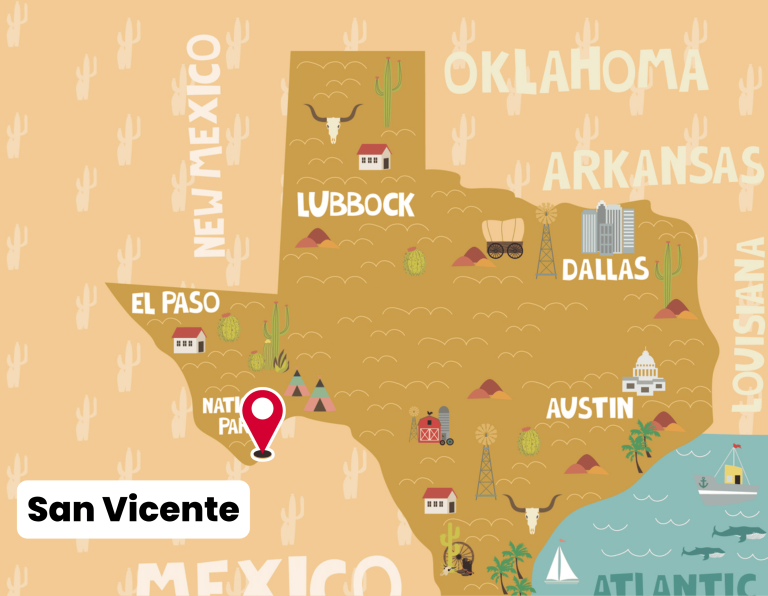
San Vicente was a Spanish frontier settlement on the Rio Grande, within what is now Big Bend National Park in Brewster County, Texas. It originated as a presidio and later developed into a small village before eventually becoming a ghost town. Today, only traces remain, including cemeteries and scattered ruins.
Establishment as a Presidio
The Presidio de San Vicente was founded around 1772–1773 as part of Spain’s broader effort to secure its northern frontier. It was one of several presidios along the Rio Grande, positioned strategically to guard against Native raids and to protect Spanish settlers, travelers, and nearby missions. The location was chosen for its proximity to a ford in the river known as the San Vicente Crossing, which made the site an important waypoint for traffic between Spanish Texas and northern Mexico.
The presidio’s garrison was tasked with patrolling the frontier and defending the corridor that connected Coahuila with the province of Texas. Despite its defensive role, the post was relatively short-lived. By the early 1780s, Spanish military priorities shifted, and the presidio was abandoned. Sources vary on the exact date: some list 1781, others 1784.
Transition to a Village
After the presidio was abandoned, the area remained occupied as a small rural village. San Vicente’s residents engaged in subsistence farming, ranching, and trade across the Rio Grande. Its position near the crossing gave it continued importance as a waypoint for movement between Texas and Mexico.
By the 19th century, San Vicente was known more as a community than a fort. Families lived along both sides of the river, maintaining ties of kinship and commerce. However, the settlement never grew into a large town and remained isolated in the rugged Chihuahuan Desert landscape.
Decline and Abandonment
The community gradually declined in the 20th century. Harsh living conditions, isolation, and limited resources contributed to depopulation. By the mid-1900s, only a handful of residents remained, and by the 1970s San Vicente no longer appeared on Texas maps.
When Big Bend National Park was created in 1944, the area around San Vicente was incorporated into the park’s boundaries on the U.S. side of the river. The Mexican village of San Vicente, across the Rio Grande in Coahuila, continued for a time but also dwindled in size.
Remains Today
Today, San Vicente is classified as a ghost town. The most visible remains are two cemeteries, known as the North and South Cemeteries, located about 1.6 miles apart. These burial grounds, with their simple stone markers, are among the few physical reminders of the settlement’s past.
Visitors to Big Bend National Park who explore the area around the Rio Grande near San Vicente Crossing can still see traces of the former community. The site is also noted for its dramatic views of the Chisos Mountains to the north and the Sierra San Vicente in Mexico across the river.
Key Facts
-
Founded: ~1772–1773 as a Spanish presidio.
-
Purpose: Part of Spain’s frontier defense system, guarding settlers and travelers along the Rio Grande.
-
Abandoned: Early 1780s as a presidio; village faded through the 20th century.
-
Present day: Lies within Big Bend National Park; known for two cemeteries and scenic surroundings.
Photos:
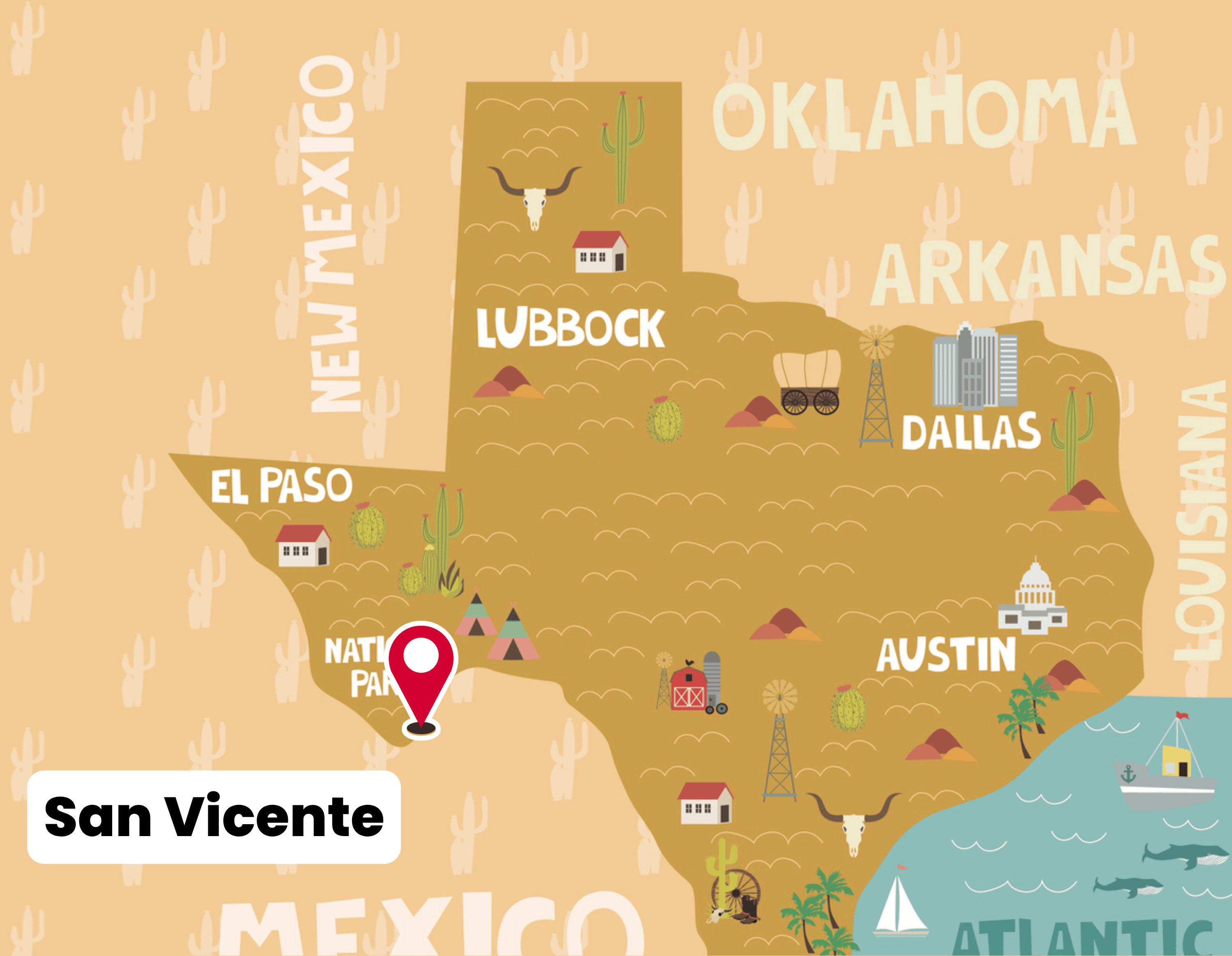
San Vicente
Map:
Sorry, no records were found. Please adjust your search criteria and try again.
Sorry, unable to load the Maps API.
Brewster County
Texas
United States
- Pets allowed in park areas subject to NPS leash rules
- Hiking, photography, historical interpretation, sightseeing of Rio Grande and mountain vistas
- Park visitor centers nearby (e.g., Panther Junction); no on-site facilities at crossing or cemeteries