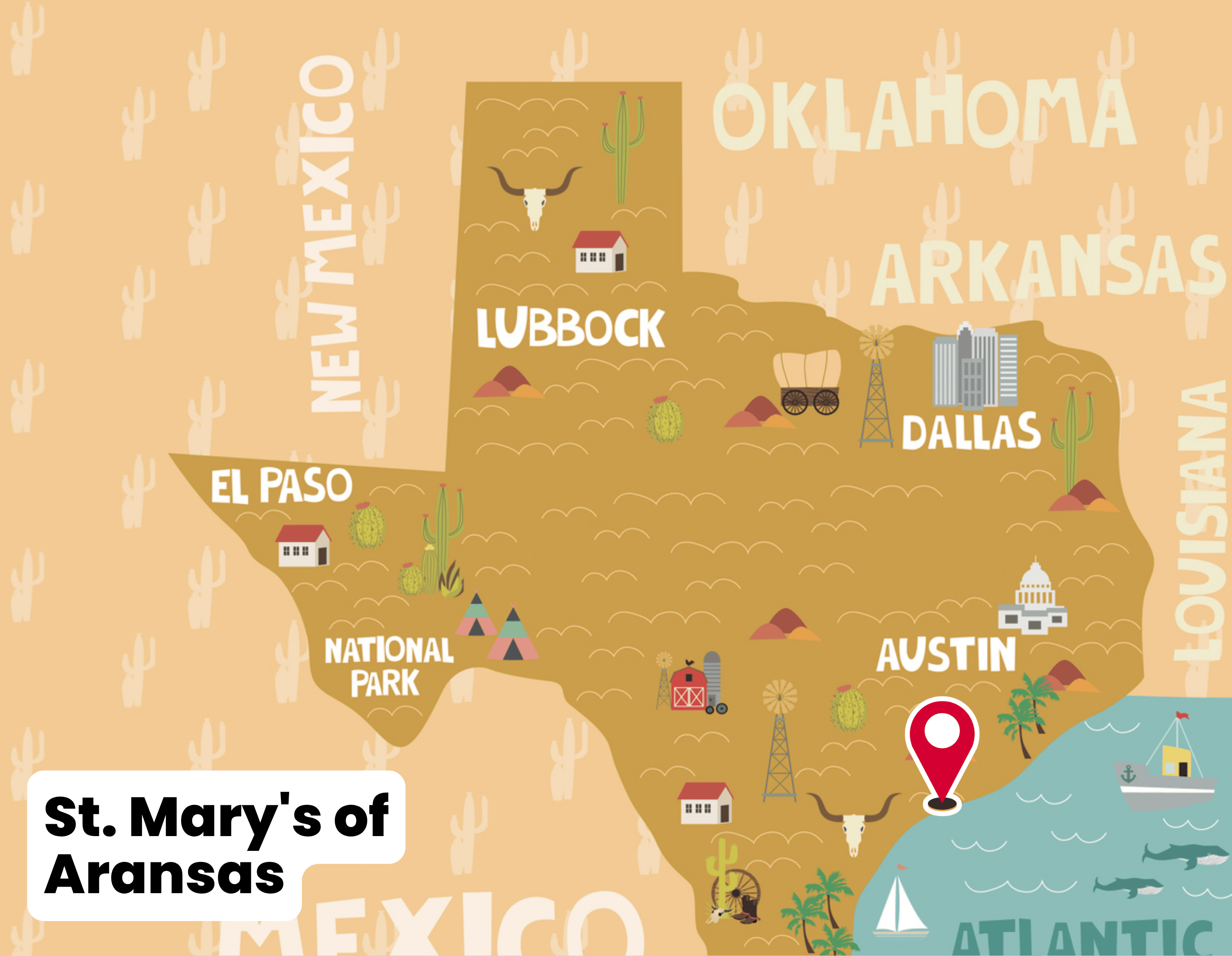
St. Mary’s of Aransas was a short-lived but historically significant community on Copano Bay in present-day Aransas County, Texas. Founded around 1850 by Joseph F. Smith, the settlement grew quickly into a bustling port town. Its location made it a vital shipping point for goods such as lumber, hides, tallow, cattle, and cotton, which were hauled by wagon from inland towns including Refugio, Goliad, Beeville, and San Antonio before being shipped to wider markets.
Growth and Prosperity
During the mid-19th century, St. Mary’s became one of the leading ports on the Texas coast. The town attracted shipping companies, warehouses, and supporting businesses. By the 1860s, it was recognized as a center of trade in the region.
The 1869 Texas Constitution designated St. Mary’s as the seat of Refugio County, a role it held until 1871, when the honor passed to the rapidly developing town of Rockport.
Civil War Era
The American Civil War played a decisive role in the history of St. Mary’s. The port was used by Confederate blockade-runners to circumvent Union naval control along the Gulf Coast. Because of this activity, federal forces targeted the town, burning a warehouse and two wharves. The destruction dealt an early blow to its maritime infrastructure and economic activity.
Decline
Several events combined to bring about the decline of St. Mary’s of Aransas:
-
Hurricane of 1875: A powerful storm damaged the town, and shallow reefs in Copano Bay created persistent navigation hazards. As a result, Morgan Lines discontinued shipping service there, redirecting trade elsewhere.
-
Railway bypass in the 1880s: The construction of the San Antonio and Aransas Pass Railway, which favored Rockport rather than St. Mary’s, shifted regional commerce away from the town.
-
Hurricane of 1886: Another destructive storm destroyed a schoolhouse and wharves, accelerating the community’s decline. Additional storm damage in the following years further reduced the town’s prospects.
By the early 20th century, the town’s commercial life had nearly vanished. The post office and general store closed in 1907, marking the effective end of St. Mary’s as an active community.
Absorption into Bayside
In 1908, the nearby community of Bayside was founded. Between 1909 and 1910, the former town site of St. Mary’s of Aransas was officially annexed into Bayside. Today, the area is remembered as part of Bayside’s heritage.
Clara Driscoll: Notable Native
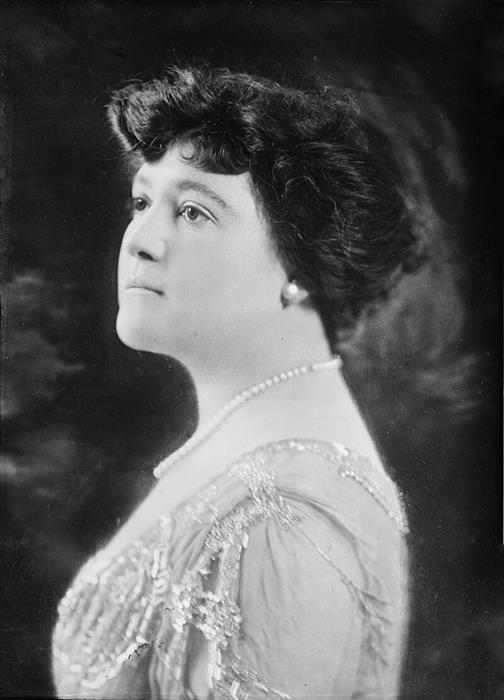
St. Mary’s of Aransas is best remembered as the birthplace of Clara Driscoll (1881–1945), philanthropist and preservationist, often called the “Savior of the Alamo.” Driscoll, born on April 2, 1881, in St. Mary’s, later became famous for her role in financing the preservation of the Alamo in San Antonio. Historical markers and local commemorations in Bayside honor her legacy.
Legacy
Although St. Mary’s of Aransas no longer exists as a distinct town, its history reflects the shifting economic and environmental forces that shaped Texas’s coastal settlements. Once a thriving port and briefly a county seat, its decline was driven by hurricanes, difficult navigation, and transportation routes that bypassed it. The annexation into Bayside ensured the community’s history was not erased but rather incorporated into the story of a new town along Copano Bay.
Photos: