
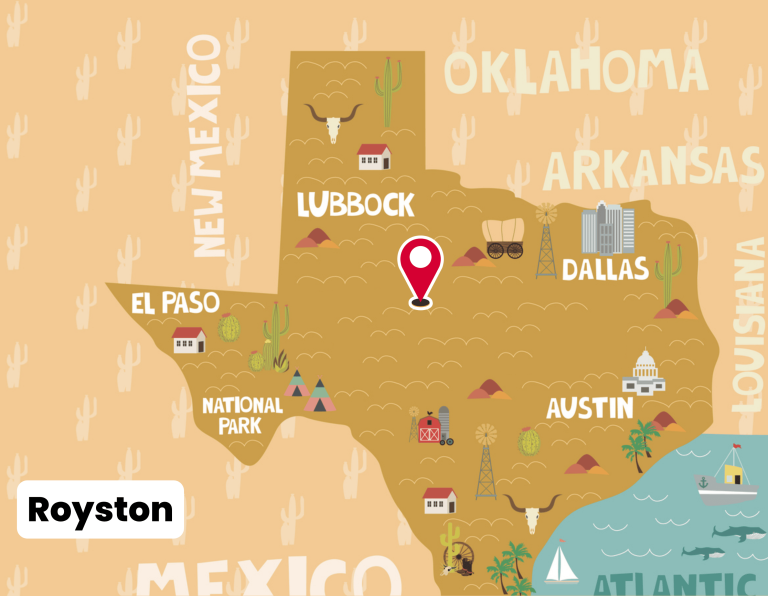
Royston, located in northeastern Fisher County, was established in 1907 when the Texas Central Railroad extended its line through the area. The railroad was the main catalyst for its creation, as it provided both transportation and economic opportunity. A post office opened that same year, and within a short time Royston became a hub for the surrounding farming community.
By 1908–1909, the town had grown rapidly. Its population reached about 500 residents at its peak. Local infrastructure reflected this prosperity: Royston had a rail depot, a 30-room hotel, a weekly newspaper (Royston Record), several general stores, a bank, cotton gin, drug store, hardware store, lumberyards, restaurants, and a public school. These services made Royston a well-rounded small town that supported both commerce and daily life for its residents.
Oil Discovery and Economic Diversification
In 1928, oil was discovered near Royston. This development extended the town’s commercial life, as the oil industry brought in new investment and jobs. While Royston remained primarily a farming community, the presence of oil helped it resist decline for a time, unlike many other small railroad towns that peaked and quickly faded.
Decline After 1940
Despite early success, Royston began to lose population and businesses by the 1940s. In 1940, the population had dropped to 75, with only three businesses and a post office still operating. Agriculture became less sustainable for many families, and larger nearby towns such as Roby drew away commerce and residents.
The Royston school continued operating until 1947, when it was consolidated with the McCauley district. This closure marked a significant step in the community’s decline, as schools often functioned as anchors for rural Texas towns.
By the 1980s and 1990s, population estimates listed around 30 residents. Businesses were virtually gone, and only scattered homes and landowners remained.
The Railroad’s End
The railroad that had given Royston life in 1907 eventually ceased operations. Freight and passenger service ended in 1972, and the tracks were removed afterward. With the loss of rail access, Royston’s remaining economic activity withered further.
Royston in the Present
By 2000, the town no longer appeared in population counts. The post office had long since closed, and the few remaining structures had deteriorated. Today, Royston is considered a ghost town, remembered through its cemetery, scattered foundations, and historical records. The land is still occupied by ranches and farms, but the organized town no longer exists.
Key Facts About Royston
-
Year established: 1907, with the arrival of the Texas Central Railroad.
-
Population peak: About 500 in 1909.
-
Oil discovery: 1928, which supported the town’s economy for several years.
-
Decline: By 1940, population fell to 75; only a few businesses remained.
-
School closure: 1947, consolidated into McCauley district.
-
Railroad service ended: 1972, after which tracks were removed.
-
Final decline: By 1980–1990, only 30 people remained; by 2000, Royston was essentially abandoned.
Photos:
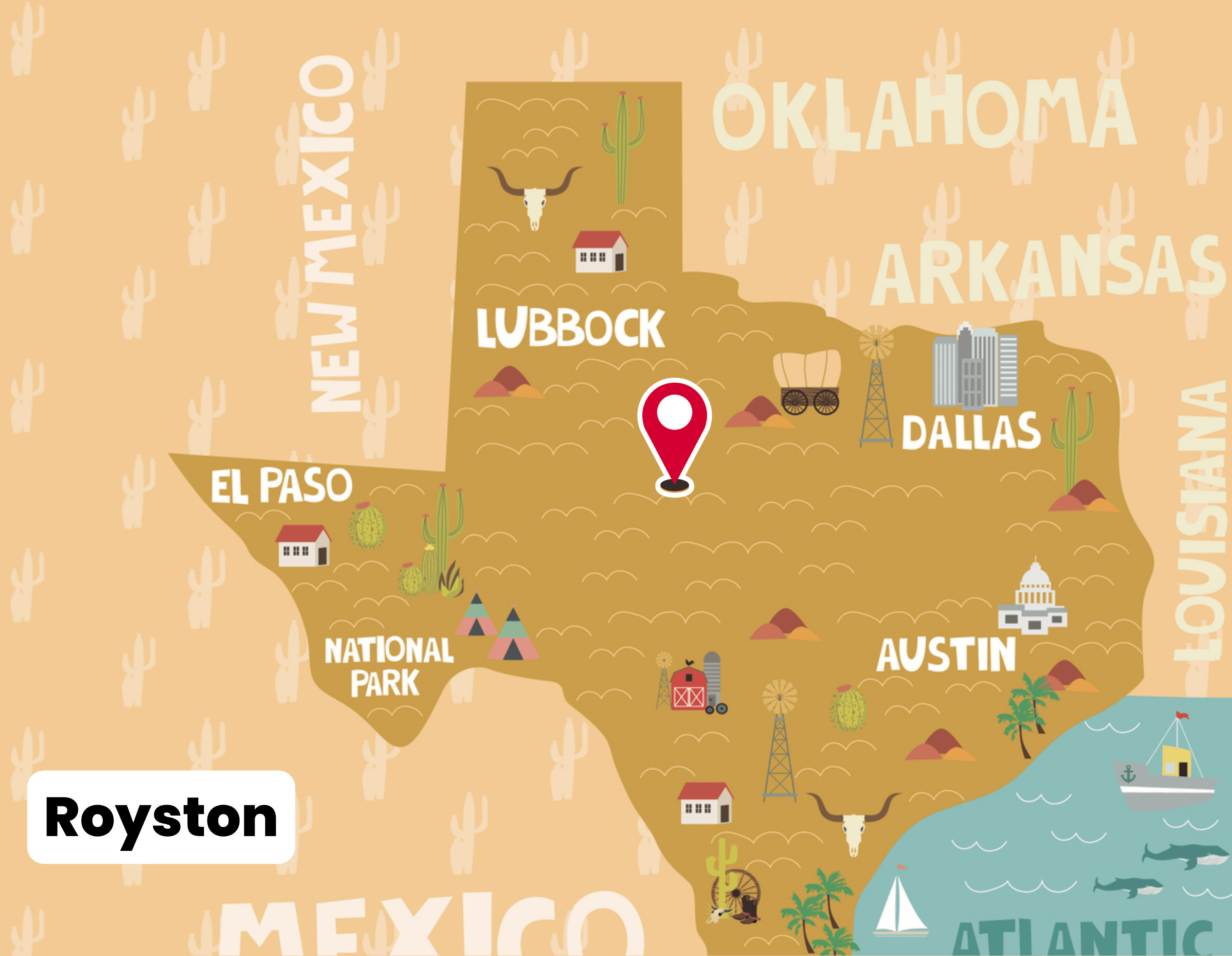
Royston
Map:
Sorry, no records were found. Please adjust your search criteria and try again.
Sorry, unable to load the Maps API.
Fisher County
Texas
United States
- Likely on private land with permission; leash recommended
- Exploring site of old railroad corridor, hunting/ranching tours, photography, reflective visit
- None