
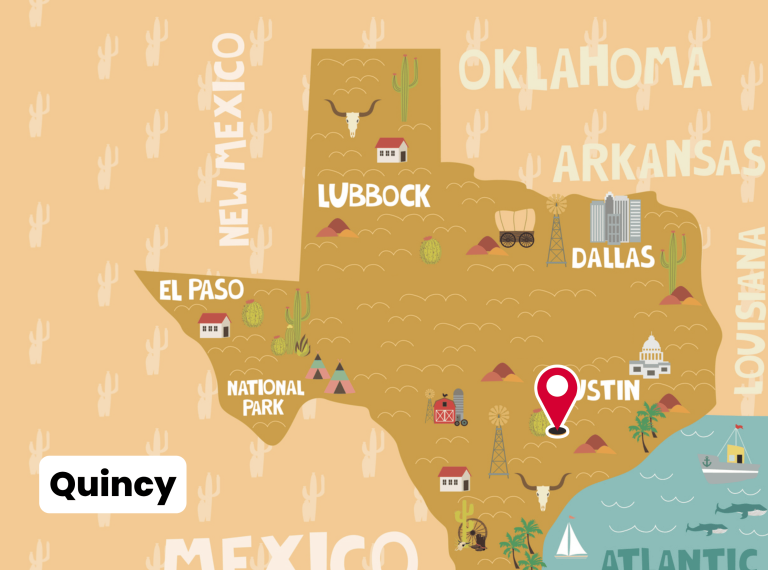
Quincy was a short-lived settlement in Bee County, Texas, founded in the early 1890s as part of a land development effort. The town was laid out on the former John Quincy Ranch, originally owned by Augustin and Juan Moya. In 1891 the property, about 10,500 acres in size, was purchased by Ohio businessman David Swickheimer. Swickheimer and his associates hoped to attract Midwestern settlers to the region, believing that the fertile soil and mild winters would support farming and encourage permanent communities.
Founding and Promotion
The project was managed by the Enterprise Land and Colonizing Company, which specialized in subdividing large ranches into farm tracts and town lots. Advertisements targeted families from states like Kansas, where poor crop conditions and limited land availability had made relocation attractive. Several families responded, moving to Bee County and beginning to establish homes in Quincy. Among those identified in local accounts were families with surnames such as Bellesen, Halsell, Larson, Walker, South, Burt, Jackson, and Johnson.
A post office was set up to serve the new settlement, marking its official recognition. Businesses followed, including a general store and other small enterprises. In 1898–99, Quincy had a school with one teacher and thirteen pupils, an indication that the community, though small, had some stability and ambition.
Challenges and Decline
Despite these beginnings, Quincy faced challenges common to speculative townsites in South Texas. The region’s semi-arid conditions made farming unpredictable, and attempts to encourage irrigation proved difficult. The area also lacked reliable transportation links. Unlike towns that grew along rail lines, Quincy remained isolated, which limited both trade and growth. Without a strong economic base, the population began to dwindle by the turn of the century.
The land and townsite were later sold to the Bee County Irrigation Syndicate, a San Antonio-based enterprise that sought to revive interest in Quincy. The syndicate promoted irrigation projects and attempted to sell parcels of land once again, but their efforts were unsuccessful. By this time, most original settlers had moved away, and the few remaining businesses disappeared.
Later Ownership
By the mid-20th century, the Quincy site had returned to ranching use. The 10,500-acre tract remained intact, owned by John J. O’Brien and his son John Morgan O’Brien. Although the town itself was gone, the name Quincy survived in local memory. Into the 1950s and 1960s, the area was still referred to as “Little Quincy.” Visitors noted traces of the community, such as foundation stones and scattered building remnants.
Quincy in Context
Quincy’s story is part of a larger pattern in Texas history. During the late 19th and early 20th centuries, land companies promoted ranch subdivisions throughout South Texas. They promised fertile farmland, modern irrigation, and in some cases railroad connections that never materialized. While some towns prospered, others — like Quincy — dwindled as settlers left in search of more reliable opportunities.
Legacy
Today, Quincy is remembered as a ghost town of Bee County. Though little physical evidence remains, its history reflects both the optimism and the challenges of land development in South Texas during a period of rapid change. The brief life of Quincy highlights the role of land promotion companies, the migration of Midwestern farmers to Texas, and the difficulties of sustaining small agricultural communities in marginal environments.
Photos:
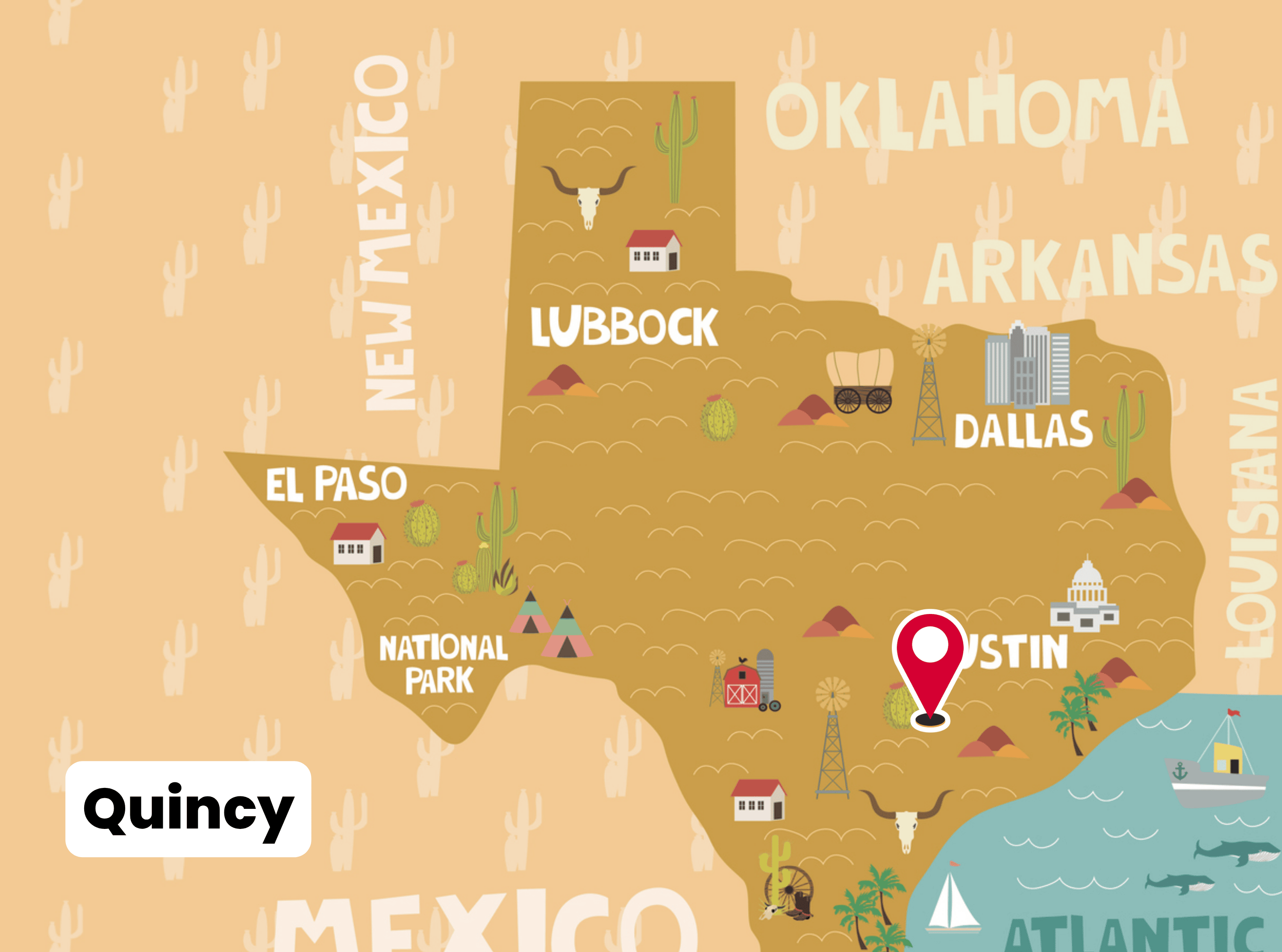
Quincy
Map:
Sorry, no records were found. Please adjust your search criteria and try again.
Sorry, unable to load the Maps API.
Bee County
Texas
United States
- Likely okay with landowner permission—no public access
- Explore rural history, photograph old foundations, birdwatching, creekside walks
- No maintained trails, restrooms, signage, or public facilities