
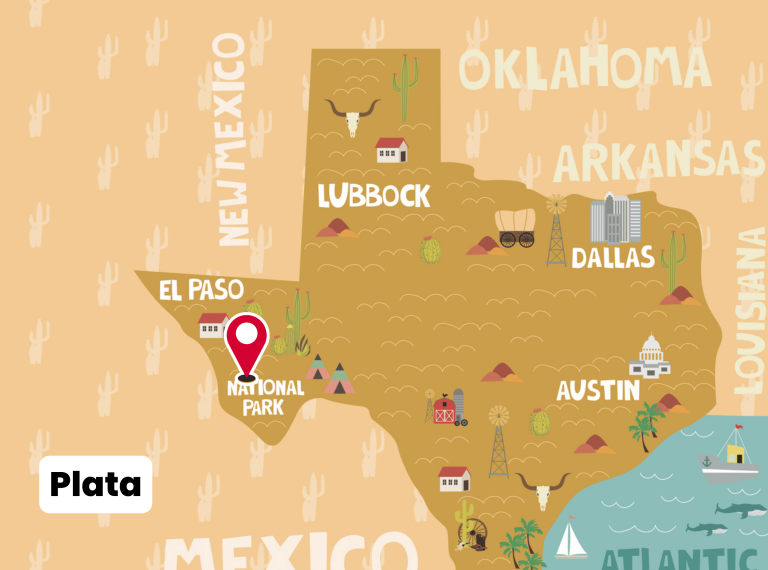
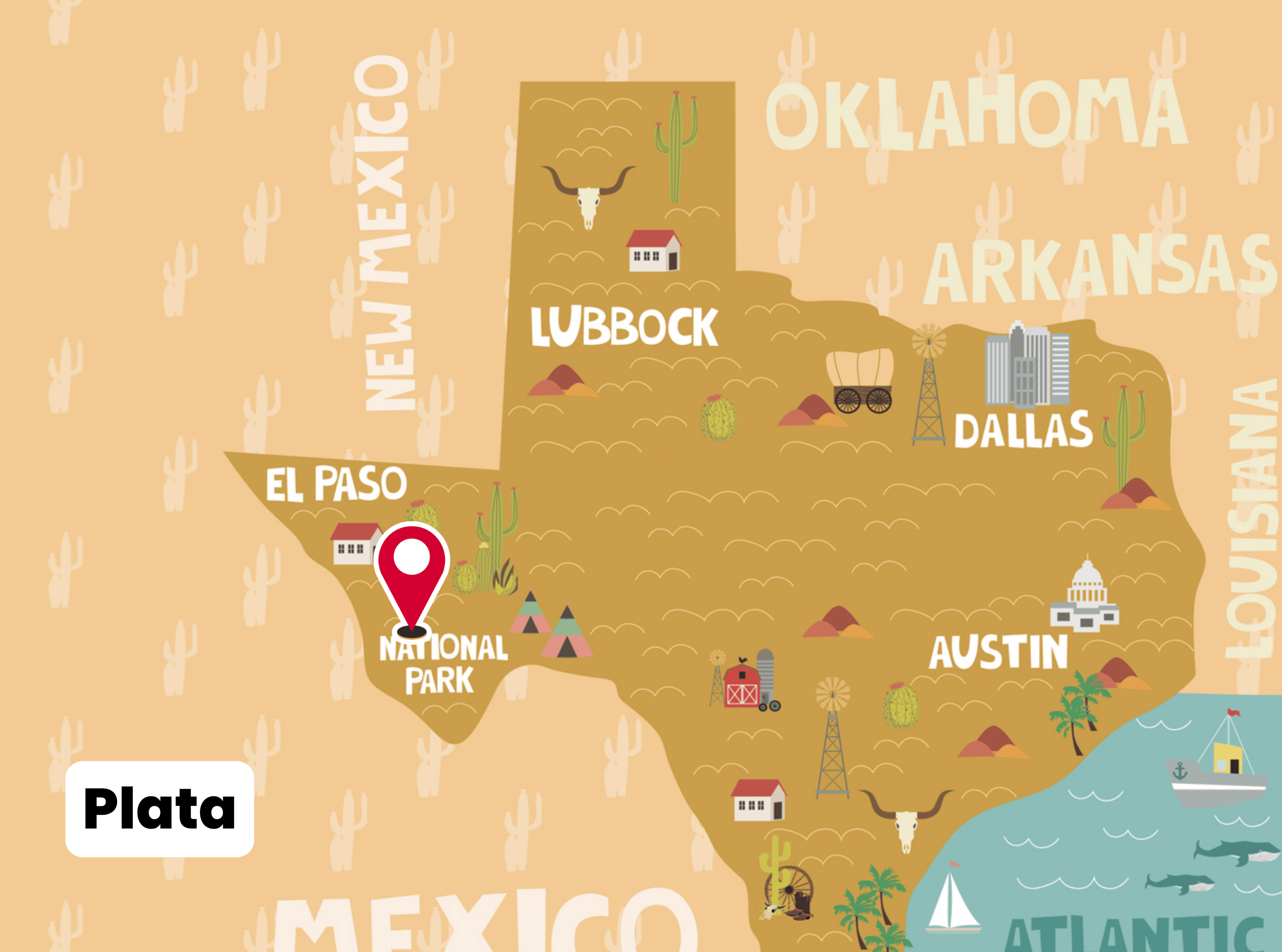
Plata (Spanish for “silver”) is a small unincorporated community in Presidio County, Texas. Located on Farm-to-Market Road 169, it sits about 25 miles south of Marfa and roughly four miles south of Alamito, near Alamito Creek. Today, Plata is sparsely populated, with just a handful of buildings, a railroad siding, and a water tank marking its presence on the West Texas landscape.
Early Settlement
The origins of Plata trace back to the early 1880s. One of the most prominent settlers was Robert Reed Ellison, who drove approximately 3,000 head of cattle into the area in March 1883. Ellison’s arrival marked the establishment of ranching as the cornerstone of the local economy. Ranch families gradually spread across the region, using Plata as a focal point for community and trade.
Railroad Development
A turning point came in 1930, when the Kansas City, Mexico and Orient Railway extended its tracks through Presidio County and established a station at Plata. The arrival of the railroad provided essential connections to broader markets, making it easier for ranchers to ship cattle and supplies. The siding and water facilities built for the trains became lasting landmarks, still visible in the community today.
Educational Presence
By the early 1930s, Plata had a functioning school. Records from 1933–34 show that Verna Humphreys was hired as a teacher for the community’s children. The school served local ranch families, reflecting the stability and growth that the railroad had helped bring to the area. While the exact timeline of the school’s operation and eventual closure is not fully documented, its presence highlights Plata’s role as more than just a railroad stop—it was also a hub for education and daily life in a remote ranching district.
Population Trends
Plata’s population peaked in the mid-20th century, but like many rural communities, it saw steady decline as ranching consolidated and families moved to larger towns. According to census records, the population stood at 37 residents in 2000. Plata remains unincorporated, with no active businesses, though its historic structures and infrastructure echo its earlier role as a community center for nearby ranches.
Present-Day Plata
Today, Plata is considered a near-ghost town. A few buildings remain, along with the railroad siding and a water tank, serving as reminders of its more active years. While it never grew into a large settlement, Plata embodies the story of many small West Texas communities shaped by cattle ranching, the railroad, and the challenges of surviving in a remote desert environment.
Key Facts About Plata
-
Name meaning: “Plata” is Spanish for silver.
-
Settlement: Robert Reed Ellison brought 3,000 cattle to the area in 1883, marking its ranching roots.
-
Railroad: The Kansas City, Mexico and Orient Railway reached Plata in 1930, spurring its development as a community center.
-
School: Plata had its own school by 1933–34, with Verna Humphreys recorded as its teacher.
-
Population: Recorded at 37 in the 2000 census.
-
Current status: Unincorporated, sparsely populated, with remnants of its railroad history still visible.
Photos:
Plata
Map:
Sorry, no records were found. Please adjust your search criteria and try again.
Sorry, unable to load the Maps API.
Presidio County
Texas
United States
- Likely allowed by landowner; always ask permission
- Photography, ranching heritage observation, historical interest
- Minimal—no public facilities, visitor centers, or services; basic roadside access to water tank or siding