
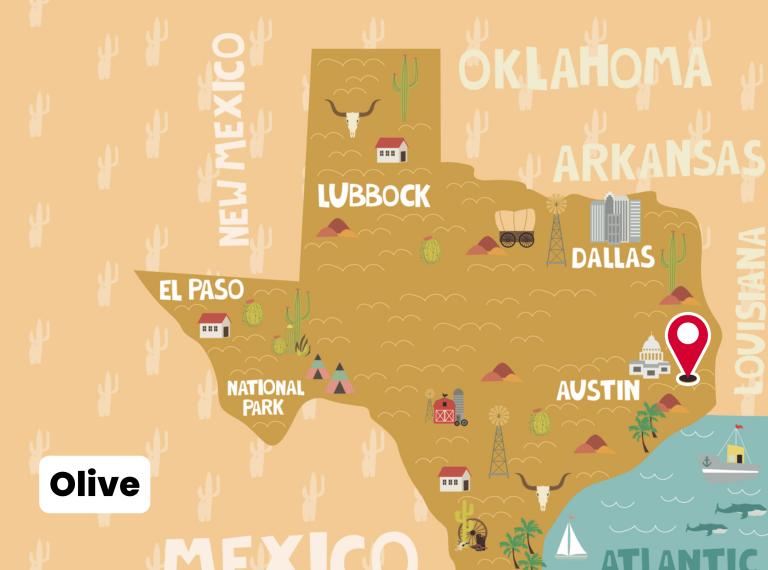
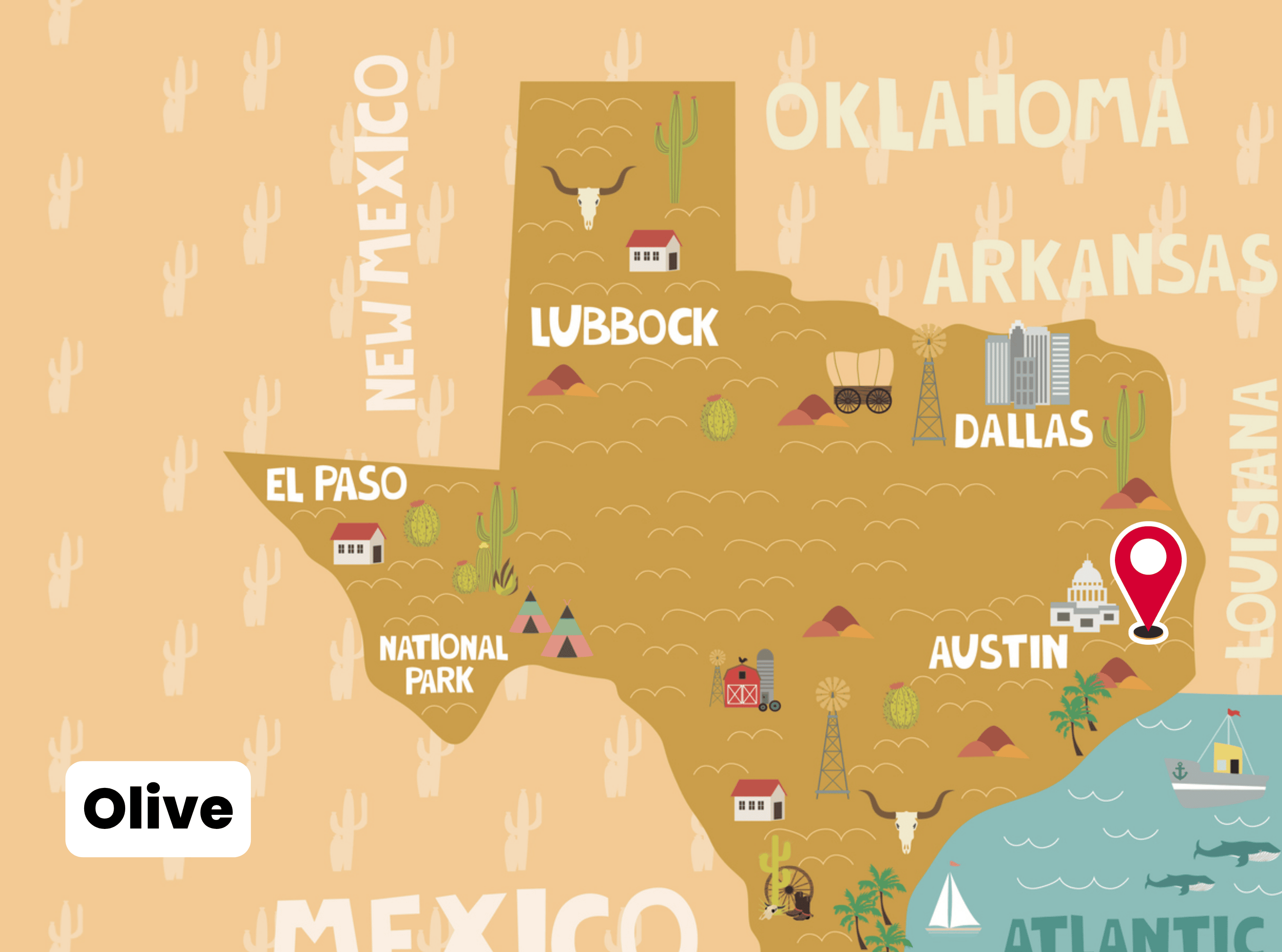
Olive, also known as Sunset, was founded in the early 1880s as a sawmill town along the Sabine and East Texas Railroad, about three miles north of Kountze in Hardin County, Texas. The town’s growth was tied directly to the lumber industry, which dominated East Texas during this period.
In 1881, the Olive and Sternenberg Company constructed the Sunset Sawmill, one of the largest in the region. The facility included a kiln for drying lumber and tram roads to transport logs from the surrounding pine forests. This infrastructure attracted workers and their families, leading to the establishment of a community.
A post office opened in 1884, further anchoring Olive as a permanent settlement. By the early 1900s, the town featured not only the large sawmill but also several businesses, including a canning factory, general stores, and housing for mill workers.
Population and Daily Life
By about 1912, Olive’s population reached an estimated 1,200 residents, making it one of the larger sawmill towns in Hardin County at the time. Most residents were connected to the mill, either directly as workers or indirectly through businesses that served the community.
Like many mill towns, Olive was a self-contained settlement. The mill provided both employment and housing, while the post office, stores, and factory gave residents access to goods and services.
Decline of the Town
Olive’s prosperity was short-lived. The Sunset Sawmill burned in 1903 but was rebuilt. Four years later, in 1907, another fire destroyed the mill, and this time operations were not resumed. The depletion of the surrounding pine forests compounded the disaster, leaving little incentive for rebuilding.
Without the mill, Olive’s economy collapsed. Families and businesses gradually moved away, and by the mid-1910s the town was already in steep decline. The post office closed in 1920, signaling the end of Olive as a functioning community.
Remnants: Olive Cemetery
The most visible remnant of the town today is the Olive Cemetery, located near the former settlement site. The cemetery contains graves dating back to the late 1880s, offering a tangible link to the families who once lived in Olive.
Although the cemetery still exists, it has been affected by time and natural events. Wildfires in recent years have caused damage to some headstones but have also exposed previously unmarked or forgotten graves.
Apart from the cemetery, the land that once held the town has largely reverted to pine forest, with little trace of the once-thriving sawmill community.
Summary
Olive, or Sunset, was a classic East Texas sawmill town that rose quickly in the 1880s, peaked in the early 1910s with about 1,200 residents, and collapsed after repeated mill fires and the exhaustion of local timber. Its brief but significant role in Hardin County history reflects the boom-and-bust cycle of the lumber industry. Today, only the Olive Cemetery remains as a marker of the community that once stood north of Kountze.
Photos:
Olive
Map:
Sorry, no records were found. Please adjust your search criteria and try again.
Sorry, unable to load the Maps API.
Hardin County
Texas
United States