
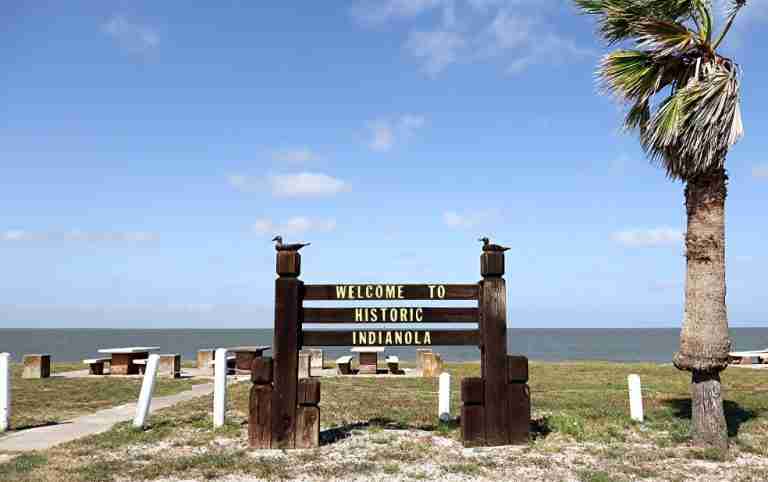
Indianola, located on Matagorda Bay in Calhoun County, began as a landing site for immigrants in the 1840s. In December 1844, German colonists arrived at a place briefly called Carlshafen, under the auspices of the Adelsverein (Society for the Protection of German Immigrants in Texas). Two years later, in 1846, Sam Addison White and William M. Cook formally surveyed a townsite known as Indian Point. The settlement grew quickly, and in 1849 the name was changed to Indianola.
Growth as a Port
From its early years, Indianola became a vital port of entry for German immigrants heading into the Texas interior. It was second only to Galveston as a gateway to Texas during the mid-19th century. The town also served as the eastern terminus of the southern branch of the Chihuahua Trail, an overland trade route connecting Texas with Chihuahua, Mexico. This position made Indianola an important hub for both immigration and commerce.
By 1875, Indianola had an estimated population of about 5,000. It featured warehouses, shipping facilities, and was seen as Galveston’s main rival for Gulf Coast trade. At its peak, Indianola was considered the second-largest port in Texas.
The U.S. Camel Corps
In the 1850s, Indianola played a unique role in a federal military experiment. As part of the U.S. Army’s Camel Corps project, which tested camels as pack animals in the arid Southwest, animals imported from the Mediterranean arrived through Indianola before being sent inland for trials.
Natural Disasters and Decline
Indianola’s prosperity ended abruptly with a series of devastating natural disasters. In September 1875, a powerful hurricane struck the town, killing hundreds and destroying much of its infrastructure. Despite the destruction, residents rebuilt and tried to restore Indianola’s importance as a port.
A second, even more destructive hurricane hit on August 20, 1886. Winds and storm surge leveled the town, and a fire that broke out afterward consumed many of the remaining buildings. The devastation was so complete that residents abandoned hopes of rebuilding. The Indianola post office closed in 1887, and the town was effectively deserted.
Legacy as a Ghost Town
Today, Indianola is recognized as a ghost town. Very little remains of the original settlement, as much of the site has been reclaimed by the waters of Matagorda Bay. However, several markers preserve its history:
-
Indianola Cemetery, where many early settlers and hurricane victims are buried.
-
The La Salle Monument, commemorating French explorer René-Robert Cavelier, Sieur de La Salle, who landed nearby in 1685.
-
Texas Historical Markers, which document Indianola’s role as a major immigration port and trade center.
The area around Indianola is now a small, unincorporated coastal community with scattered homes and fishing activity, but the once-bustling city never regained its former place in Texas commerce.
Historical Significance
-
Indianola was once the second-largest port in Texas, rivaling Galveston.
-
It served as a key entry point for German immigrants during the mid-19th century.
-
It was the terminus of the southern branch of the Chihuahua Trail, a vital overland trade route.
-
The U.S. Army’s Camel Corps passed through the port in the 1850s.
-
Two major hurricanes, in 1875 and 1886, destroyed the town and led to its abandonment.
Photos:
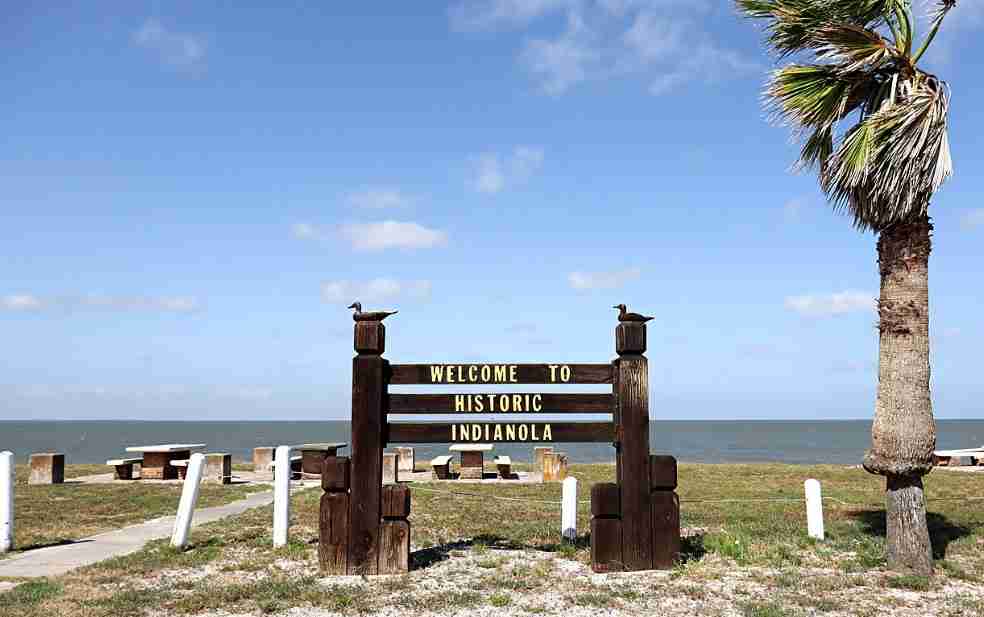
Indianola
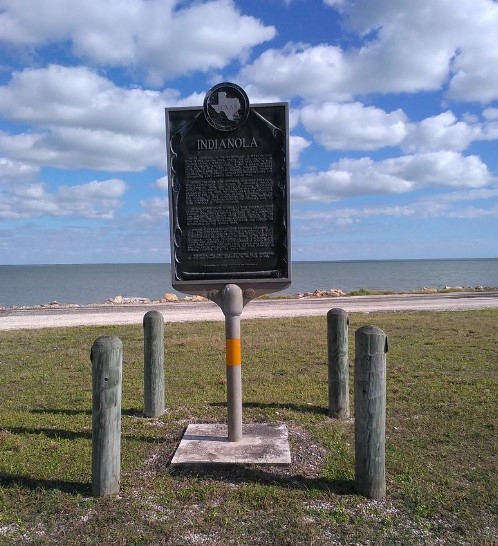
Indianola
Map:
Sorry, no records were found. Please adjust your search criteria and try again.
Sorry, unable to load the Maps API.
Indianola
Texas
77979
United States
- Yes, leashed pets are welcome in public areas
- Fishing, boating, picnicking, historical exploration
- Boat ramps, picnic areas, restrooms, RV hookups, cabins, restaurant, and bar
2C2K Photography, IndianolaWelcome, CC BY 2.0
https://en.wikipedia.org/wiki/Indianola,_Texas#/media/File:IndianolaTXhistoricalmarker.jpg