
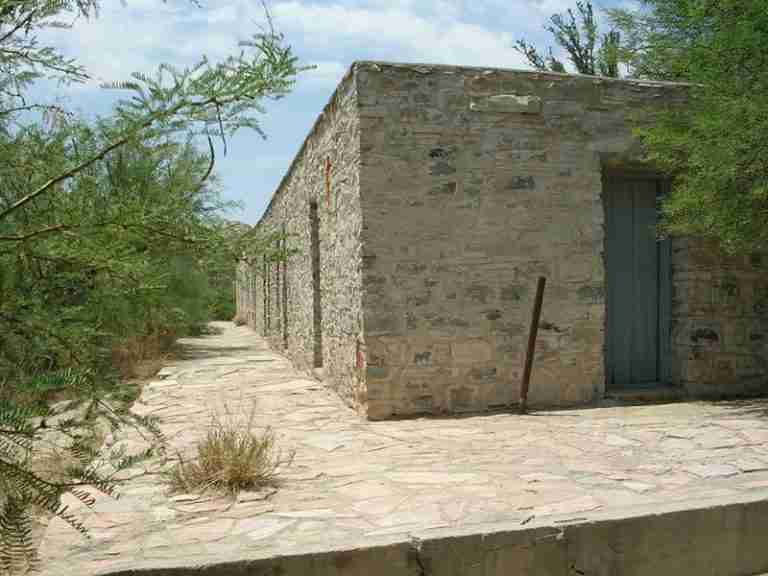
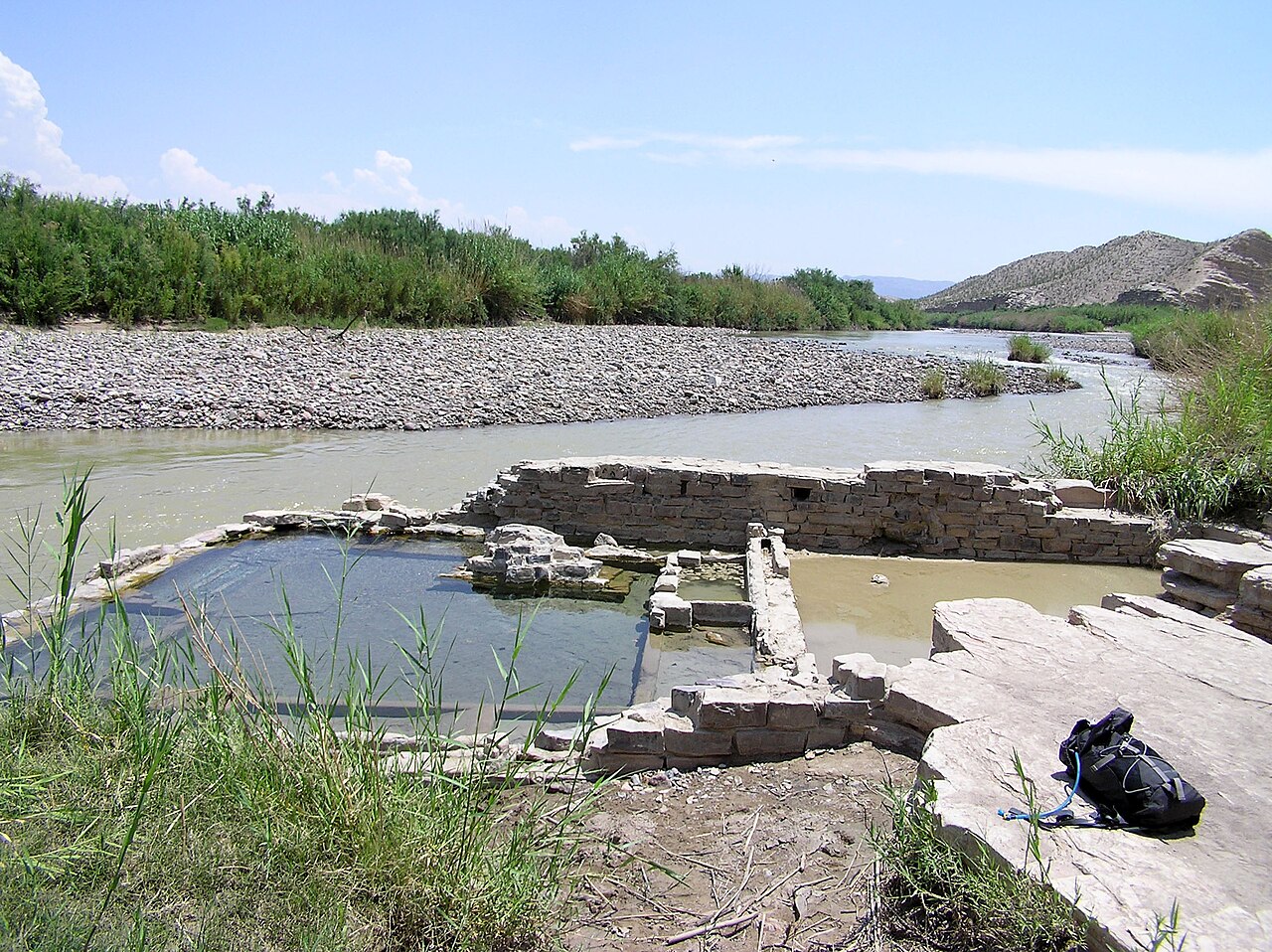
Langford Hot Springs, often called Boquillas Hot Springs, sit along a remote stretch of the Rio Grande in Big Bend National Park. The springs maintain a consistent temperature of about 105°F, created by groundwater that circulates through deep fractures before rising to the surface. Visitors today can see both the natural pool beside the river and structural remnants from the early twentieth century, giving the site a blend of natural and historical interest.
Early Development
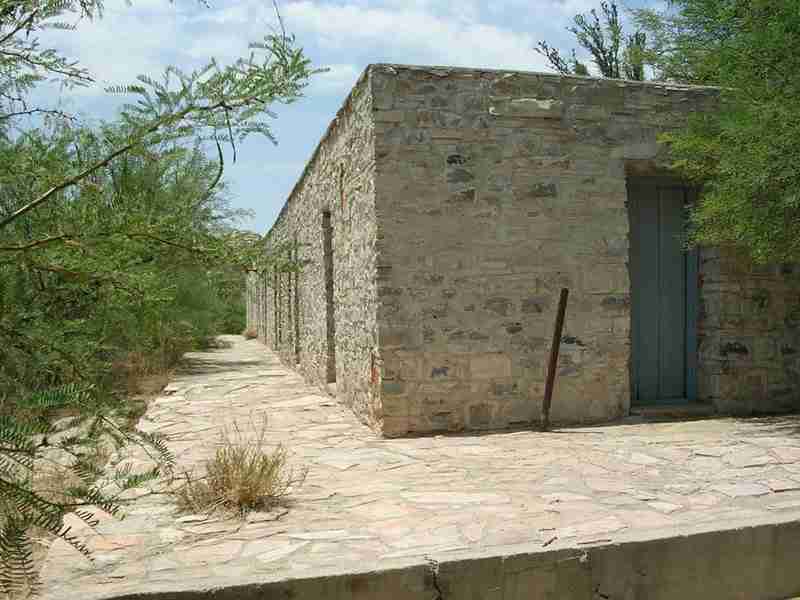
The springs were well known long before the twentieth century, as shown by centuries-old pictographs on nearby rock walls. Their modern history began in 1909 when J. O. Langford, a Mississippi native dealing with recurring malaria, traveled to the area after hearing about the water’s restorative qualities. After reporting personal improvement, he claimed the land and began developing a small health resort. His work included building an adobe home for his family, a stone bathhouse, and a motor court with multiple cabins. Floods eventually damaged and washed away parts of the resort, but foundations and wall segments remain visible.
Cultural Significance
Archaeological evidence indicates that Indigenous groups visited the springs for generations. Pictographs along the cliffs show symbols and figures painted in mineral pigments. These artworks add important context to the area, reflecting the long human presence at this water source.
Geological Features
The hot springs form when groundwater circulates deep underground through fault systems, heats naturally, and returns to the surface at a steady temperature. The water contains dissolved minerals that were widely believed in earlier decades to offer health benefits. While these claims reflected the thinking of the time, the consistent warmth and mineral content are well documented physical traits of the springs.
What Remains Today
Visitors can still see the stone foundation of Langford’s bathhouse and the remains of his small resort complex. The site is part of the Hot Springs Historic District, which is listed on the National Register of Historic Places. The springs themselves continue to flow beside the Rio Grande, creating a natural pool that attracts hikers and travelers each year.
Photos:
Map:
Sorry, no records were found. Please adjust your search criteria and try again.
Sorry, unable to load the Maps API.
Big Bend National Park
Texas
79834
United States
- General Areas: Pets are not allowed on trails, off roads, or on the river within Big Bend National Park.
- Hot Springs Area: Given the park's general restrictions, pets are not permitted in the Langford Hot Springs area.
- Soaking in the Hot Springs: Enjoy a relaxing dip in the natural stone pool, which offers scenic views of the Rio Grande and the Mexican landscape beyond.
- Hiking: The Hot Springs Historic Trail provides a moderate 0.75-mile (1.2 km) hike, featuring panoramic vistas, historical ruins, and ancient rock art.
- Wildlife Viewing: The area is home to diverse flora and fauna, including various bird species, making it a haven for nature enthusiasts.
- Historic Ruins: Visitors can explore the remains of the early 20th-century resort structures, including the bathhouse foundation and homestead buildings.
- Interpretive Signage: Informational panels provide historical context and insights into the cultural and geological significance of the hot springs.
- Parking Area: A designated parking area is available near the trailhead leading to the hot springs.