
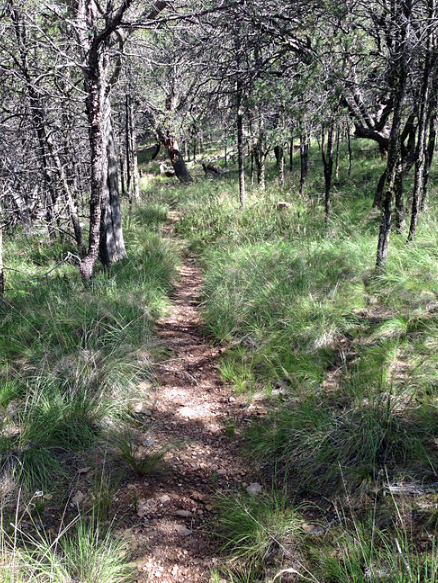
Juniper Canyon lies on the eastern side of the Chisos Mountains in Big Bend National Park, Brewster County, Texas. It is known for its rugged, remote landscape and dramatic elevation shifts that transition from desert lowlands to high mountain terrain. The canyon takes its name from the juniper trees that thrive throughout the area, alongside oak and piñon pine. This mix of desert and mountain vegetation creates a diverse ecosystem that supports wildlife such as mule deer, javelina, and a variety of bird species.
The Juniper Canyon Trail
The Juniper Canyon Trail is one of the park’s more challenging routes, attracting seasoned hikers and backpackers looking for a strenuous and rewarding experience. The trail descends roughly 3,000 feet from the high country of the Chisos Mountains down to the desert floor, or climbs that same distance if taken in reverse. It covers about 6.5 miles one way, making it part of Big Bend’s extensive backcountry network. Hikers often use the Juniper Canyon Trail to connect with the Dodson Trail, creating a link between the Chisos Basin area and the desert sections of the park. The route features sweeping views of the Chisos peaks, distant mesas, and the Rio Grande region far below.
Terrain and Conditions
The terrain in Juniper Canyon is steep and rocky, demanding physical endurance and careful navigation. The trail surface includes loose gravel and uneven rock, with long stretches exposed to the sun. The area’s remoteness means that visitors must carry plenty of water and be prepared for limited shade and sudden weather changes. Elevation and temperature differences can be extreme, with cooler mountain air giving way to intense desert heat as the trail descends.
Access and Preparation
Reaching Juniper Canyon requires travel along rough backcountry roads, and a high-clearance vehicle is strongly recommended. The route is not suitable for low-clearance or small passenger cars. There are no services in the immediate area, and cell reception is limited or nonexistent. Hikers should register with the National Park Service before undertaking overnight trips, carry a detailed map, and be self-sufficient in case of emergencies. Because of its isolation, the trail offers a sense of solitude that appeals to experienced hikers seeking quieter parts of Big Bend National Park.
Natural Features and Wildlife
The vegetation in Juniper Canyon changes noticeably with elevation. In higher sections, pinyon pine, oak, and juniper dominate the slopes, while lower elevations transition to desert flora such as agave, sotol, and prickly pear. The canyon provides habitat for a wide range of animals, from reptiles and desert rodents to larger mammals like deer and black bears. Birdwatchers may spot peregrine falcons or golden eagles circling the cliffs, adding to the area’s appeal for nature enthusiasts.
A True Backcountry Experience
Juniper Canyon represents the rugged side of Big Bend National Park—remote, scenic, and demanding. It offers some of the park’s most rewarding views for those prepared to take on its steep trails and challenging conditions. Whether approached as part of a longer backpacking route or a strenuous day hike, the canyon captures the wild character that defines the Chisos Mountains and makes Big Bend one of Texas’s premier outdoor destinations.
Photos:
Juniper Canyon
Map:
Sorry, no records were found. Please adjust your search criteria and try again.
Sorry, unable to load the Maps API.
Big Bend National Park
Texas
79834
United States
Pets are not permitted on trails or in the backcountry areas of Big Bend National Park
- Hiking
- Backpacking
- Bird watching
- Photography, and nature observation.
As a backcountry area, Juniper Canyon has limited amenities. Visitors should be prepared with sufficient water, food, and navigation tools.