
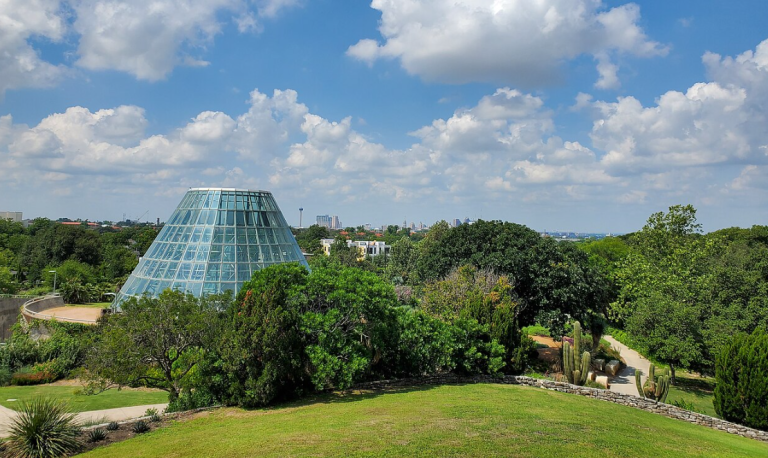
The San Antonio Botanical Garden in San Antonio, Texas, is one of the city’s most beloved green spaces. Spanning roughly 38 acres, this living museum of plants opened to the public on May 3, 1980, after years of planning and community support. The garden was designed as both an educational and recreational destination, blending natural beauty with science-based learning to connect visitors with the world of plants.
Design and Landscape
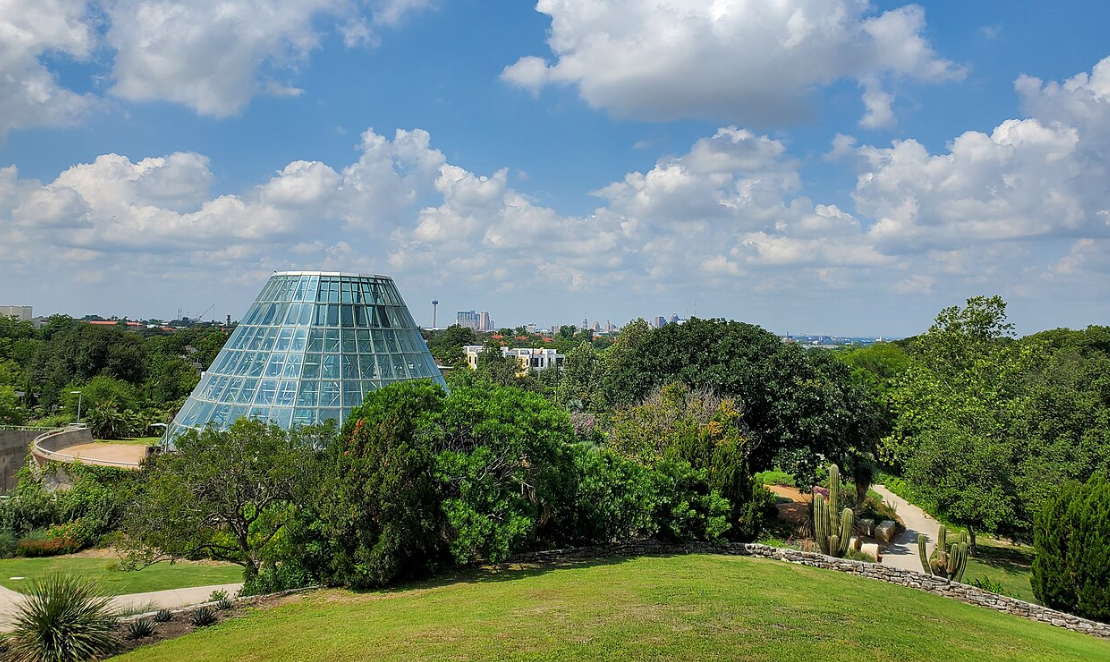
The garden’s landscape design combines modern architectural features with naturalistic plant settings. Its most striking structure, the Lucile Halsell Conservatory, was designed by architect Emilio Ambasz and opened in 1988. This conservatory features a series of glass buildings partially embedded into the earth to create distinct environments for tropical, desert, aquatic, and alpine plant collections. The design balances innovation with environmental sensitivity, allowing visitors to move from arid cactus habitats to lush rainforest conditions within minutes.
The Texas Native Trail
One of the garden’s signature features is the Texas Native Trail, a walking path that showcases plants from different regions of the state. The trail highlights three main ecological areas—the Hill Country, East Texas Piney Woods, and South Texas Plains. Along the way, visitors can see how native plant life adapts to the diverse climates and soils of Texas. This section of the garden emphasizes conservation, sustainability, and the importance of native flora in maintaining local ecosystems.
Educational and Community Role
Education has always been central to the San Antonio Botanical Garden’s mission. It offers a wide range of programs for visitors of all ages, including horticulture workshops, plant identification classes, and environmental education for school groups. These programs encourage hands-on learning and promote an understanding of how plants impact everyday life. Families can also enjoy interactive features like the Family Adventure Garden, designed to engage children with nature through play-based learning.
Seasonal Beauty and Events
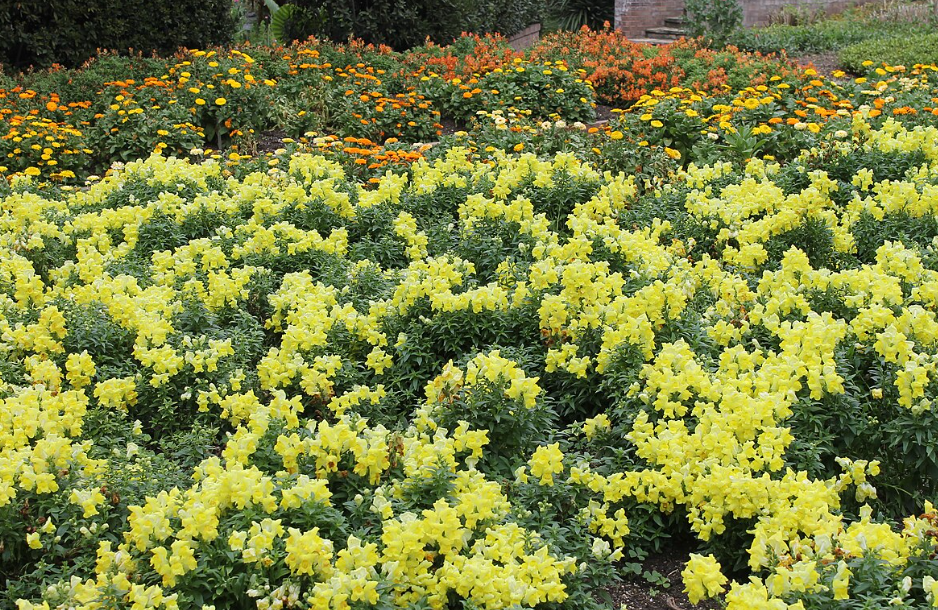
Throughout the year, the garden hosts seasonal displays and community events that draw locals and tourists alike. Flower festivals, plant sales, and art installations add color and activity to the grounds. Carefully maintained walking trails, scenic ponds, and shaded sitting areas provide visitors with opportunities to relax and appreciate the natural surroundings. With each visit, the landscape offers something new, reflecting the rhythms of the Texas seasons.
A Living Symbol of San Antonio’s Growth
Today, the San Antonio Botanical Garden stands as both a peaceful retreat and a hub of environmental awareness. It continues to grow through expansions and new projects, supporting conservation efforts and public enjoyment. Whether strolling through the rose garden, attending a workshop, or visiting the Conservatory’s tropical house, guests experience the deep connection between nature, design, and community that defines this San Antonio landmark.
Photos:
San Antonio Botanical Garden

San Antonio Botanical Garden
San Antonio Botanical Garden
Map:
Sorry, no records were found. Please adjust your search criteria and try again.
Sorry, unable to load the Maps API.
San Antonio
San Antonio
78209
United States
Pets are not allowed inside the garden to protect the plants and wildlife. However, service animals are permitted in compliance with ADA regulations. Occasionally, the garden hosts special pet-friendly events that allow dogs under specific rules and supervision.
Visitors can stroll through diverse plant collections, walk the Texas Native Trail, and experience the Lucile Halsell Conservatory. The garden hosts workshops, classes, and community programs focused on gardening, sustainability, and nature education. Families can enjoy interactive areas like the Family Adventure Garden, and seasonal events bring live exhibits, art installations, and themed festivals to the grounds.
The San Antonio Botanical Garden includes multiple themed gardens, a world-class glass conservatory, and accessible pathways. Facilities include a gift shop, on-site café, restrooms, and picnic areas. Shaded seating, scenic ponds, and water features provide relaxing spots throughout the property. Free on-site parking and wheelchair accessibility are available to visitors.