
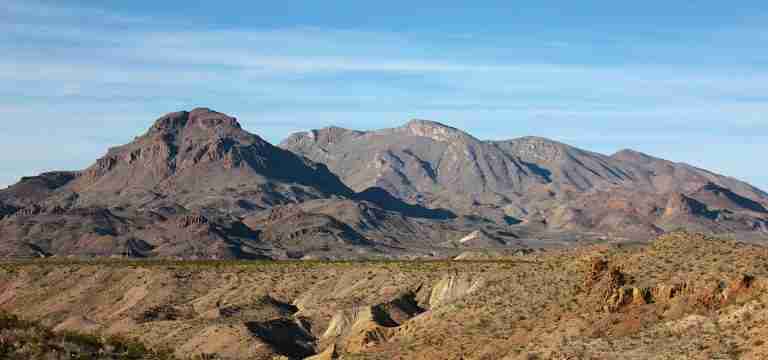
The Christmas Mountains are a rugged and isolated range in Brewster County, Texas, situated near the western edge of Big Bend National Park. The mountains span roughly 9,270 acres, or about 15 square miles, and share a short border with the national park. Rising to a high point of 5,728 feet (1,746 meters), the Christmas Mountains offer striking desert views of the Chihuahuan Desert below. The terrain is steep, rocky, and dominated by canyons and ridges shaped by centuries of erosion and ancient volcanic activity.
Environment and Ecosystem
This area lies within the Chihuahuan Desert, one of North America’s most biologically diverse desert ecosystems. The slopes and foothills are covered with desert vegetation, including oak, juniper, mesquite, chaparral, yucca, agave, prickly pear, and various grasses. The mix of flora supports a range of desert wildlife, such as mule deer, javelina, and a variety of reptiles and birds. The rugged terrain and plant diversity make the Christmas Mountains a living classroom for studying desert ecology and the delicate balance of arid environments.
Geological Background
Geologically, the Christmas Mountains are part of the Trans-Pecos region, known for its volcanic and igneous rock formations. The area features remnants of ancient volcanic activity that shaped much of West Texas millions of years ago. The rocks and exposed strata reflect the region’s complex geological history, where uplift and erosion created sharp ridgelines and isolated peaks. This volcanic past contributes to the region’s unique topography and makes it a valuable site for geological research and field studies.
Ownership and Conservation
In 2011, the Texas General Land Office transferred the Christmas Mountains tract to the Texas State University System (TSUS). The land was set aside for educational, research, and conservation purposes, giving students and scientists a rare opportunity to study desert geology, climate, and ecosystems in a protected setting. The property’s remote location and limited human impact make it an important reference point for understanding the natural state of the Chihuahuan Desert.
Access and Recreation
Public access to the Christmas Mountains is available but carefully managed. Visitors must obtain permission from the Texas State University System and make arrangements through the Terlingua Ranch Lodge, which oversees authorized vehicle entry. Due to the challenging terrain, only high-clearance four-wheel-drive vehicles are permitted beyond certain points. Hiking and photography are popular among visitors who make the journey, offering a chance to experience solitude and expansive desert scenery.
A Natural Texas Landmark
Though less known than neighboring Big Bend National Park, the Christmas Mountains stand out as a pristine example of Texas’s desert mountain landscapes. They provide sweeping views of the Trans-Pecos region and serve as a bridge between scientific study and natural preservation. The combination of geological significance, ecological diversity, and managed access keeps the Christmas Mountains one of the most authentic and untouched wilderness areas in the state.
Photos:
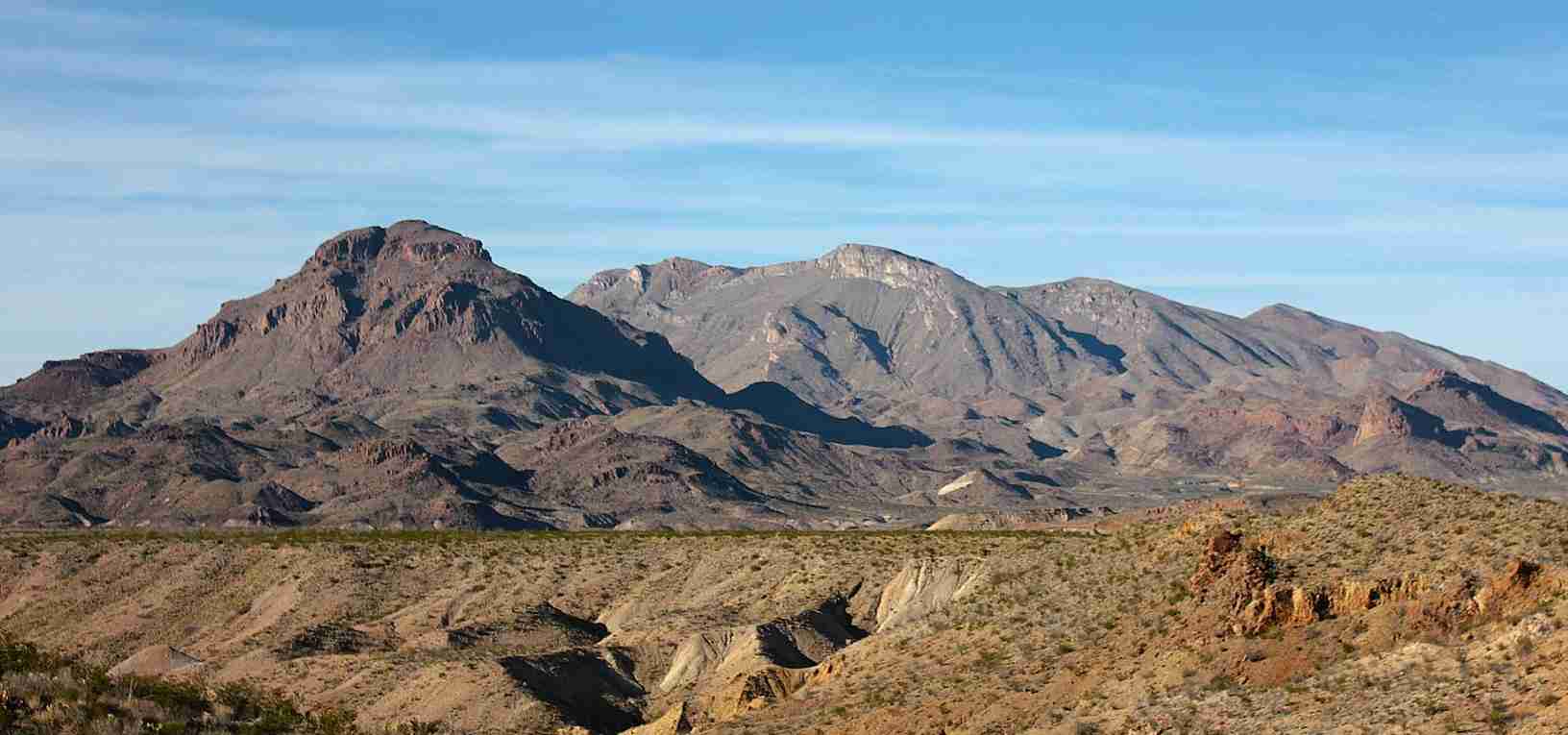
Christmas Mountains viewed from the south. Little Christmas Mountain to left. Texas, USA.
Map:
Sorry, no records were found. Please adjust your search criteria and try again.
Sorry, unable to load the Maps API.
Study Butte
Texas
79852
United States
Pets are allowed in the Christmas Mountains; however, they must be kept on a leash at all times. It's important to note that the terrain is rugged, and there are no developed trails, so pet owners should exercise caution.
- Hiking
- Mountain biking
- Horseback riding
- Wildlife observation
- Photography
- Scientific research
- Cabin guest rooms
- RV sites and hookups
- Tent campgrounds
- Horse corral
- Restaurant (Bad Rabbit Café)
- Swimming pool
- Airstrip
- Convenience store
John Cummings, Christmas Mountains, CC BY-SA 3.0