
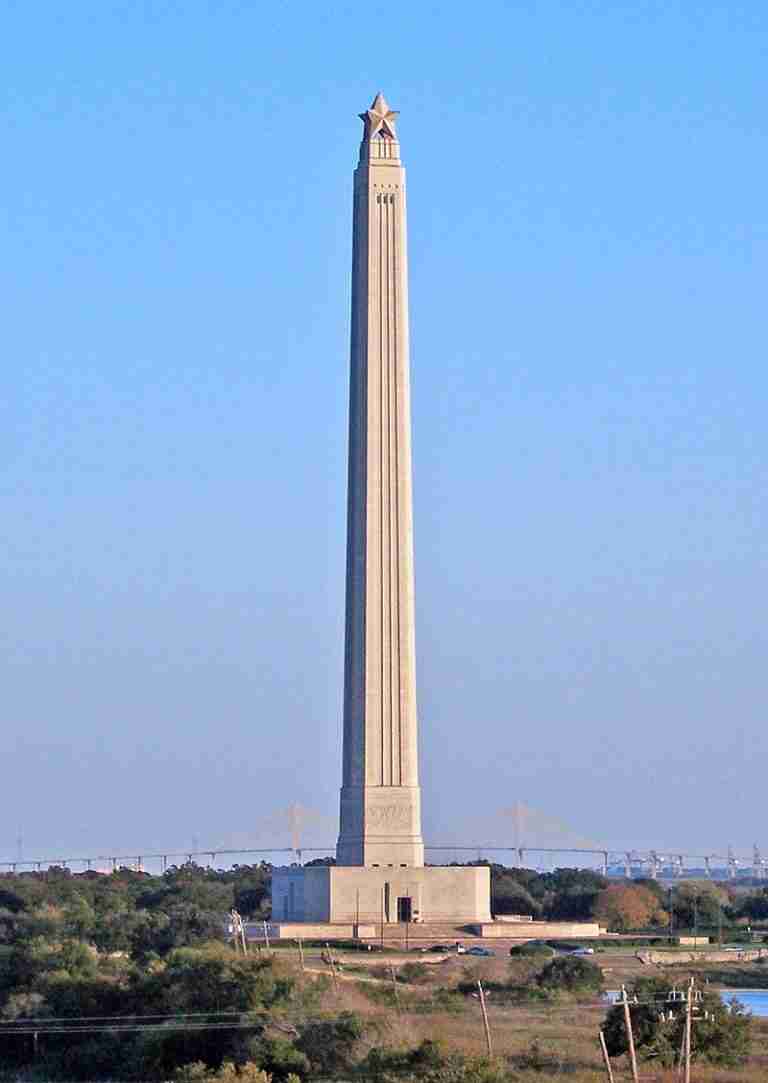
The San Jacinto Monument stands near Houston, Texas, as one of the most recognized landmarks in the state. It commemorates the Battle of San Jacinto, the decisive 1836 conflict where Texian forces led by General Sam Houston defeated the Mexican army under General Santa Anna. This victory secured Texas’s independence from Mexico and paved the way for the establishment of the Republic of Texas. Today, the monument and surrounding grounds preserve the memory of that pivotal moment in American and Texan history.
Design and Construction
Rising 567 feet above the San Jacinto Battleground, the monument is considered the tallest masonry column in the world. It was designed by architect Alfred C. Finn with structural engineering by Robert J. Cummins and constructed by the W. S. Bellows Construction Company. Completed in 1939, the structure is made of reinforced concrete faced with Texas Cordova shell limestone, giving it both durability and a distinct local character. At its summit sits a massive 220-ton Lone Star, standing 34 feet tall, symbolizing Texas’s independent spirit.
The monument’s construction began in 1936 as part of the Texas Centennial celebration. Work was temporarily delayed by funding shortages and weather, but it was completed three years later and officially dedicated on April 21, 1939, marking the 103rd anniversary of the Battle of San Jacinto. The entire project was funded by state and federal resources through the Works Progress Administration, reflecting a national commitment to preserving American history during the Great Depression era.
The Monument and Museum
Visitors can take an elevator to the monument’s observation deck, which offers panoramic views of the surrounding battleground, the Houston Ship Channel, and the distant Houston skyline. The observation level provides a clear perspective of the strategic landscape that played such a critical role in the Texian victory.
At the base of the monument is the San Jacinto Museum of History, which houses artifacts, documents, and exhibits tracing the cultural and political evolution of Texas from its colonial period through its entry into the United States. The museum provides valuable context for visitors interested in understanding the broader story of Texas independence.
The San Jacinto Battleground
The San Jacinto Monument stands within the San Jacinto Battleground State Historic Site, encompassing more than 1,200 acres of protected land. The site includes walking paths, interpretive displays, and a reflection pool stretching 1,750 feet, enhancing the monument’s visual symmetry and solemn atmosphere. The grounds are maintained by the Texas Parks and Wildlife Department, offering visitors a blend of education and relaxation.
In addition to its historical significance, the park serves as a gathering place for commemorations, school visits, and family outings. Its peaceful setting and proximity to the Houston Ship Channel make it a unique destination where Texas history and modern industry meet.
Legacy and Significance
The San Jacinto Monument stands as a symbol of perseverance, independence, and the enduring pride of Texas. It continues to attract historians, students, and travelers from around the world who come to reflect on the events that shaped the state’s identity. More than a memorial, it is a living reminder of the sacrifices made during the struggle for freedom and the defining spirit that still characterizes Texas today.
Photos:
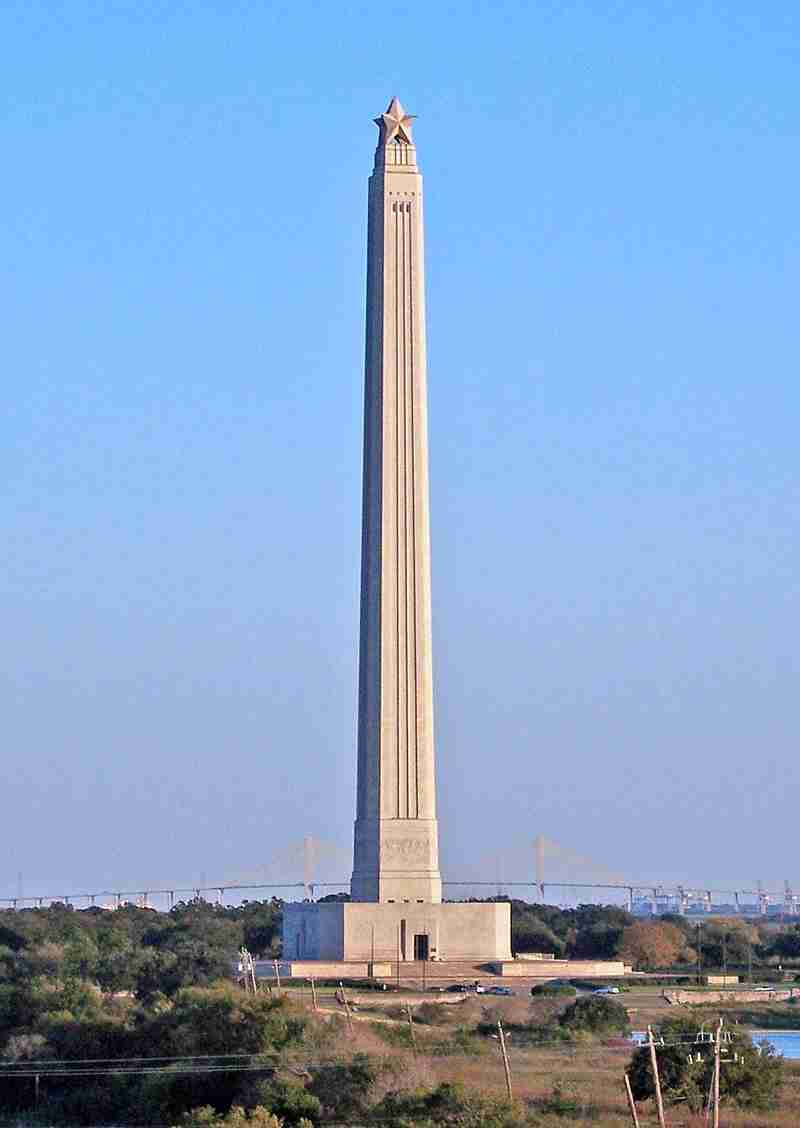
Photo of the San Jacinto Monument taken from the Battleship Texas in Fall 2006. The Fred Hartman Bridge is visible in the background.
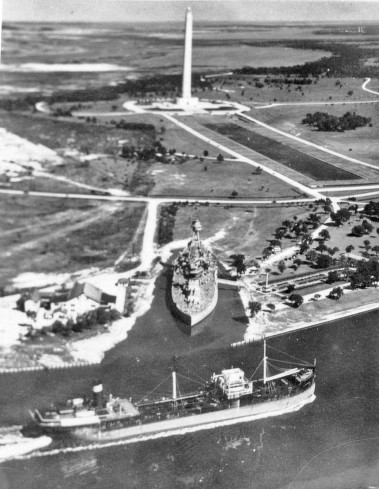
Aerial View San Jacinto Monument (1950s)
Map:
Sorry, no records were found. Please adjust your search criteria and try again.
Sorry, unable to load the Maps API.
Deer Park
Texas
77571
United States
Yes, on leashes
- Visiting the monument and museum
- Picnicking in designated areas
- Walking and hiking on park trails
- Visitor center with exhibits
- Picnic areas
- Restrooms
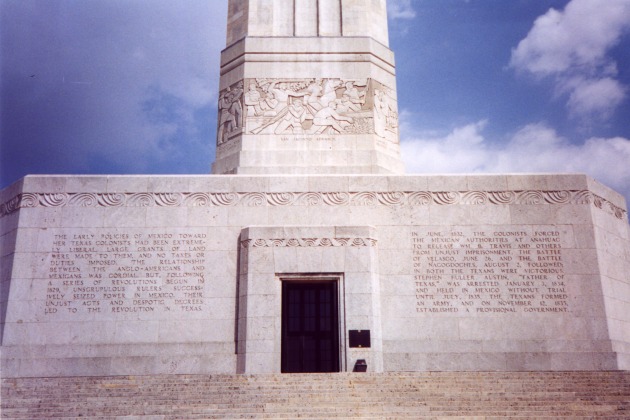
en:User:BoNoMoJo, Base of San Jacinto Monument (2001-05), CC BY-SA 3.0