
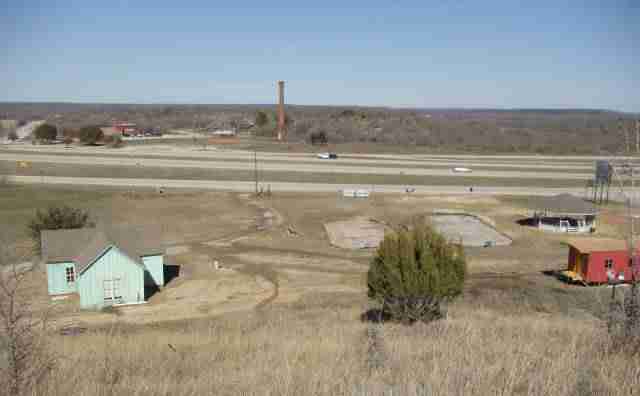
Thurber, located in Erath County in Central Texas, was once one of the most prosperous coal mining towns in the state. Founded in the mid-1880s by the Texas and Pacific Coal Company, the town was established to serve as the company’s main mining and production center. During its peak years in the early 20th century, Thurber was home to as many as 8,000 to 10,000 residents, making it one of the largest company towns in Texas at the time.
The community was fully owned and operated by the Texas and Pacific Coal Company, which provided everything from housing and stores to schools and entertainment for its workers. The workforce was diverse, with many European immigrants, particularly Italians, Poles, and Mexicans, who came to work in the mines and brick plant. This mix of cultures created a lively community that thrived on hard labor and industrial growth.
A Coal-Fueled Boom
Coal mining was the backbone of Thurber’s economy. The mines supplied high-quality bituminous coal to the Texas and Pacific Railway and other railroads throughout the region. During the height of production in the early 1900s, Thurber’s mines produced hundreds of thousands of tons of coal annually. The town became a symbol of Texas’s industrial power, operating under a company-controlled system that managed nearly every aspect of daily life.
However, the prosperity that coal brought did not last forever. By the 1920s, oil began to replace coal as the dominant fuel source for trains and industry. As demand declined, the mines gradually shut down, and families began to leave in search of new opportunities. By the late 1930s, coal mining had ended in Thurber, leaving behind an empty town that once thrived on energy production.
The Famous Thurber Brick Plant
In addition to its coal mines, Thurber became well-known for its brick manufacturing plant, which produced millions of vitrified paving bricks. These durable bricks were used to pave streets across Texas and beyond, including parts of Fort Worth, Dallas, and Austin. The plant’s success provided jobs and helped sustain the town after coal mining began to wane, but by the 1930s, even the brickworks could not keep Thurber alive as a major industrial hub.
Today, visitors can still see remnants of the brick kilns and smokestacks that once defined the skyline. The legacy of Thurber’s brick production remains visible in many historic buildings and streets throughout Texas, a testament to the craftsmanship that originated in this small town.
From Boomtown to Ghost Town
When the Texas and Pacific Coal Company shifted its focus to oil, Thurber’s population rapidly declined. The company began dismantling homes and buildings, and by the 1950s, only a few residents remained. The once-bustling community became a ghost town, but its history was preserved through the remaining structures and stories passed down by former residents and their descendants.
Today, Thurber stands as a historical site and a reminder of Texas’s industrial transformation. The W.K. Gordon Center for Industrial History of Texas, located near the old townsite, showcases artifacts, photographs, and exhibits that tell the story of Thurber’s rise and fall. The site offers visitors a glimpse into a unique chapter of Texas history, where coal, brick, and industry shaped the lives of thousands.
Photos:
Map:
Sorry, no records were found. Please adjust your search criteria and try again.
Sorry, unable to load the Maps API.
Erath County
Texas
76463
United States
Yes
- Exploring the remains of the town
- Photography of historical structures
- Learning about Texas mining history
- Parking area
- Restroom facilities
- Informational signage