
The Blue Ridge Mountains form one of the most recognizable sections of the Appalachian Highlands, stretching through the eastern United States. The range runs roughly 550 miles southwest from southern Pennsylvania through Maryland, West Virginia, Virginia, North Carolina, South Carolina, Tennessee, and into northern Georgia. Some geologists extend the range slightly farther, depending on how the boundaries are defined. These mountains are famous for their soft, bluish appearance when seen from afar—a result of isoprene, a natural hydrocarbon released by trees that causes light to scatter in blue wavelengths.
The Blue Ridge region contains some of the oldest rocks on Earth. Geological studies date sections of its bedrock to more than one billion years old, making it among the most ancient mountain ranges still visible today. Over time, weathering and erosion have softened the once jagged peaks into the rolling, forested ridges that define the area.
The mountains are also home to one of America’s most scenic drives, the Blue Ridge Parkway. This 469-mile highway links Shenandoah National Park in Virginia to Great Smoky Mountains National Park in North Carolina, offering continuous views of forests, waterfalls, and overlooks. The Parkway, completed in stages throughout the mid-20th century, stands as a major attraction for nature lovers and road trippers alike.
Blue Ridge in Texas
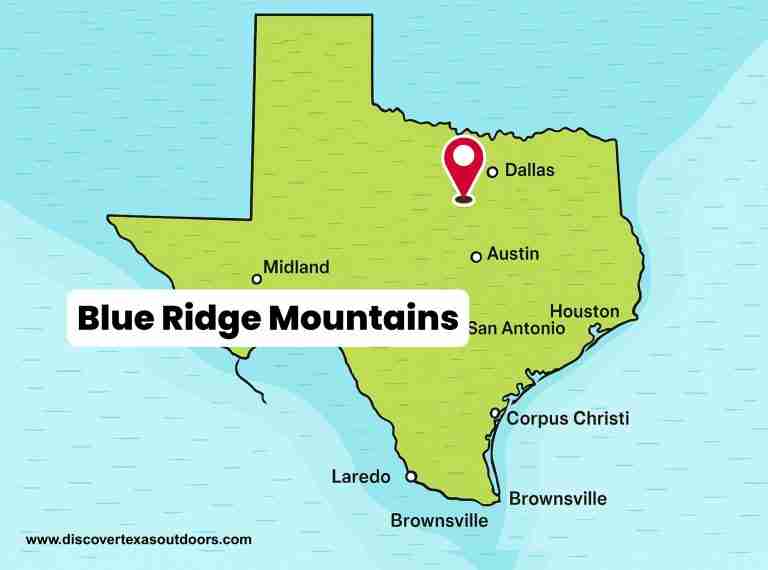
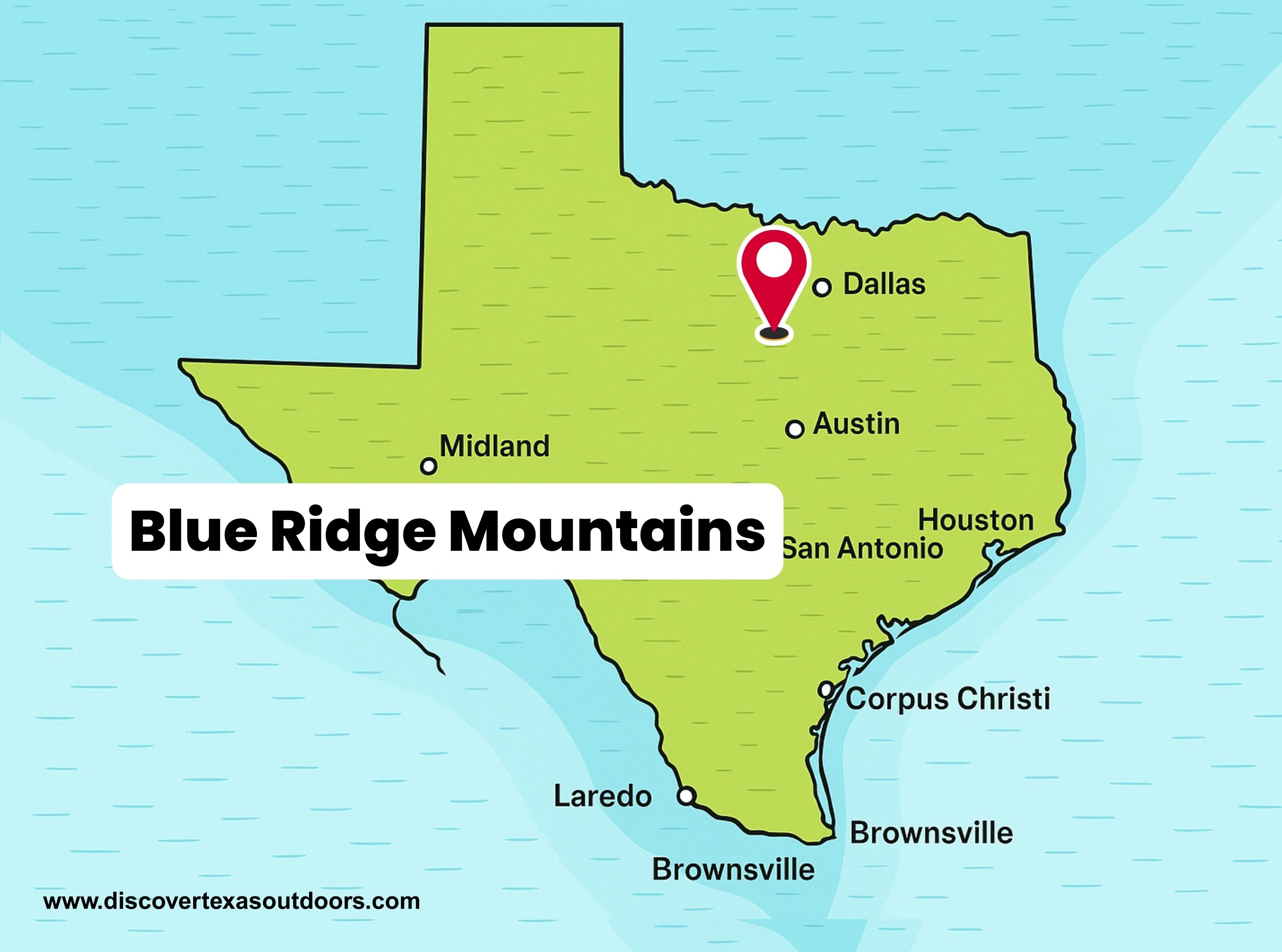
While most people associate the name “Blue Ridge” with the Appalachian region, the term also appears in West Texas geography. In the Guadalupe Mountains near the New Mexico border lies Blue Ridge, sometimes referred to as Blue Ridge North Peak. This summit rises to approximately 8,280 feet (2,524 meters) within the Guadalupe Mountains National Park area. The range itself contains some of the highest elevations in Texas, including the nearby Guadalupe Peak at 8,751 feet—the state’s highest point.
The Blue Ridge area of the Guadalupe Mountains features rugged limestone terrain, desert vegetation, and dramatic elevation changes typical of the Chihuahuan Desert landscape. It provides opportunities for backcountry hiking and photography and showcases the state’s diverse topography, which ranges from plains to alpine environments within a few hours’ drive.
Photos:
Map:
Sorry, no records were found. Please adjust your search criteria and try again.
Sorry, unable to load the Maps API.
Blue Ridge
Texas
75424
United States
Pets are permitted in campgrounds, picnic areas, and along roads, but they are not allowed on trails, in the backcountry, or in park buildings.
-
Hiking: The park offers various trails, including the loop to Hunter Peak via the Bear Canyon and Tejas Trails, providing solitude and stunning views.
-
Wildlife Observation: The diverse ecosystems support a variety of wildlife, making it ideal for birdwatching and photography.
-
Camping: Designated campgrounds are available for tents and RVs, offering a rustic experience under the stars.
-
Visitor Center: Provides information, exhibits, and restrooms to enhance your visit.
-
Picnic Areas: Equipped with tables and grills, perfect for family outings.
-
Campgrounds: Pine Springs Campground offers sites with picnic tables and grills; RV sites are available with limited hookups.